Ultimate Purchasing Guide for Mobile Loading Ramps (AWP)
Mobile Yard Ramp Ultimate Buying Guide | Practical Selection Tips for Loading Ramp
Analyze forklift loading ramp specs, manufacturing processes & global procurement trends to help international B2B buyers avoid pitfalls in model selection, customs clearance and site adaptation.
1. Industry Background: Mobile Yard Ramp Has Become a Global Logistics Necessity
The rapid expansion of global cross-border e-commerce distribution centers, manufacturing plants, port temporary yards and small-to-medium warehousing businesses has created a universal challenge: most facilities were built without fixed loading docks. The height gap between trucks, shipping containers and ground floors drastically cuts forklift loading efficiency and frequently triggers safety hazards including cargo sliding and forklift rollovers.
Traditional simple steel plate ramps suffer insufficient load capacity, lack anti-slip protection and cannot adjust heights, failing to comply with workplace safety regulations such as EU CE, North American OSHA and local Southeast Asian standards. Against this backdrop, loading ramp, forklift loading ramp and mobile yard ramp have become standardized procurement items for global B2B buyers.
Data from the 2026 global material handling industry survey shows the worldwide mobile loading ramp market reached USD 2.727 billion in 2025, with a compound annual growth rate (CAGR) of 4.6% projected from 2026 to 2032. Hydraulically adjustable mobile yard ramp accounts for 61% of all orders, making it the fastest-growing segment. Major purchasing demand originates from Southeast Asian warehousing parks, North American freight yards, Middle Eastern heavy industry factories and small Filipino foreign trade warehouses.
From communicating with overseas buyers worldwide, we have found that over 60% of first-time purchasers fall into costly traps. Many only compare unit prices while ignoring five core standards: rated load safety margin, hydraulic adjustment range, anti-slip deck surface, anti-corrosion coating and international safety certifications. Buying mismatched forklift loading ramp leads to recurring issues such as deformed ramp main beams, forklift skidding, incompatibility with container heights and rapid outdoor corrosion, driving up long-term expenses on maintenance, safety accidents and cargo damage.
Currently, mainstream mobile loading ramps fall into two categories: manual simple loading ramp and hydraulic mobile mobile yard ramp. Hydraulic forklift ramps that fit multiple vehicle and site conditions are the top choice for long-term overseas procurement. Mastering site matching, hardware parameters and compliance certifications before purchasing is critical to selecting equipment tailored to your project.
2.Five Core Selection Parameters You Must Master When Buying a Loading Ramp
2.1 Rated Load Capacity: Reserve a 20% Safety Margin for Combined Forklift & Cargo Weight
Load capacity is the top priority when selecting a forklift loading ramp, and the parameter where buyers most often make wrong choices. Most purchasers only calculate cargo weight without accounting for the forklift’s own dead weight. Long-term overloading bends the main beam of a mobile yard ramp and cracks welding seams, creating severe safety risks during loading and unloading.
The universal global selection rule: Ramp rated load capacity ≥ (Forklift dead weight + Maximum single shipment weight) × 1.2 safety factor. Standard mobile yard ramp load capacities range from 6 tons to 15 tons, equivalent to 13,000 lbs to 30,000 lbs, compatible with 2-ton to 5-ton internal combustion and electric forklifts. For example, a 4-ton forklift carrying 6 tons of goods creates a total combined weight of 10 tons, requiring a loading ramp rated for 12 tons or higher to eliminate overload damage during dynamic loading operations.
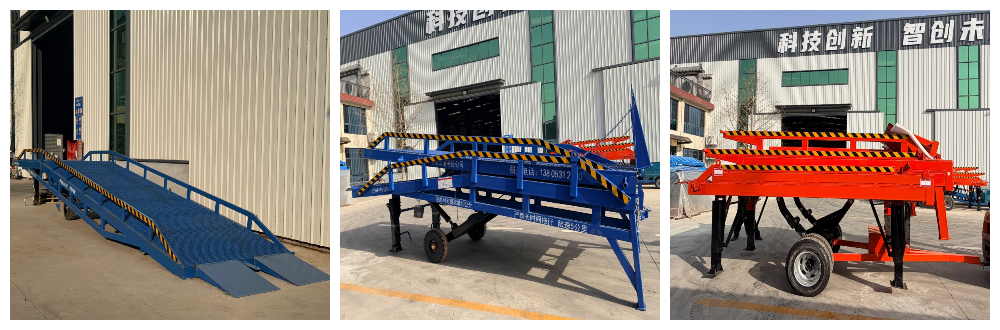
High-quality forklift loading ramp features an integrated main beam constructed from thickened Q345 manganese steel rectangular tubing, with multi-layer cross beams to disperse weight. No obvious shaking occurs when fully loaded forklifts travel across. Low-cost thin steel plate ramps sag under full load and easily fracture after prolonged use, failing safety inspections at European and American industrial facilities.
2.2 Hydraulic Height Adjustment Range: Compatibility With Global Containers & Freight Vehicles
Chassis heights of freight vehicles vary drastically across regions. Standard 20ft/40ft shipping containers sit 800mm–1200mm above ground, light box trucks have chassis as low as 700mm, and heavy semi-trailers can reach a maximum height of 1600mm. Therefore, the hydraulic adjustment range of a mobile yard ramp directly determines equipment versatility.
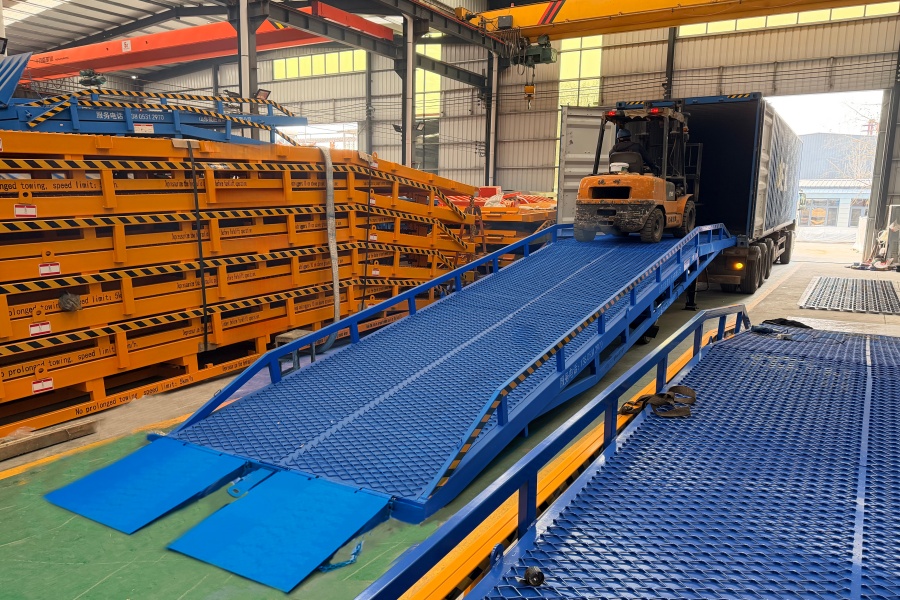
Export-grade standard loading ramp offers an adjustment range of 1100mm–1700mm, compatible with nearly all global freight vehicles. If your warehouse only handles standard containers, basic narrow-adjustment-range forklift loading ramp can cut procurement costs. For ports and integrated freight yards handling mixed vehicle types, prioritize wide-adjustment-range mobile yard ramp, eliminating the need for site reconstruction to accommodate different trucks. All certified export ramps must include a horizontal transition platform at the front to prevent forklift front wheel jamming and pallets scraping truck bed floors.
2.3 Total Ramp Length & Travel Gradient: Control Forklift Safety Factor
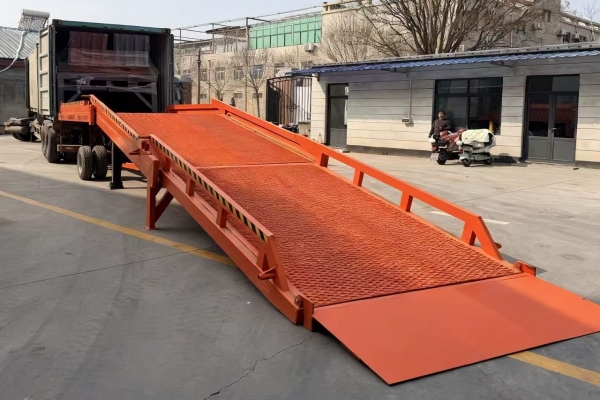
Total ramp length dictates travel gradient. Steeper slopes increase braking and climbing strain on forklifts, making heavy pallets prone to sliding off. The unified global industry safety standard caps the maximum gradient for fully loaded forklifts at 20%. Per construction standards, every 300mm height difference requires a minimum additional 1.8 meters of ramp length.
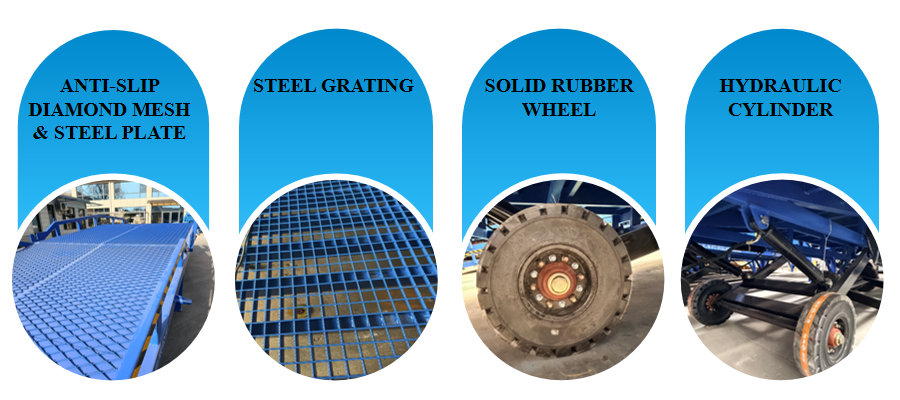
Standard 8-ton mobile yard ramp measures 11.4 meters in total length to fit standard container heights of 1100mm–1300mm. 10-ton and 15-ton heavy-duty models also feature a 11.4-meter extended ramp to accommodate high-chassis heavy semi-trailers. If limited site space rules out long ramps, opt for compact 6-ton loading ramp. Never purchase short steep ramps to save space; prolonged use accelerates wear on forklift tires and brake systems, raising operational costs. All qualified forklift loading ramp decks use diamond-shaped perforated anti-slip grating for rapid drainage and anti-slip performance in rainy or humid warehouses, a mandatory production requirement.
2.4 Mobility Support & Safety Accessories: Differentiate Indoor and Outdoor Use Cases
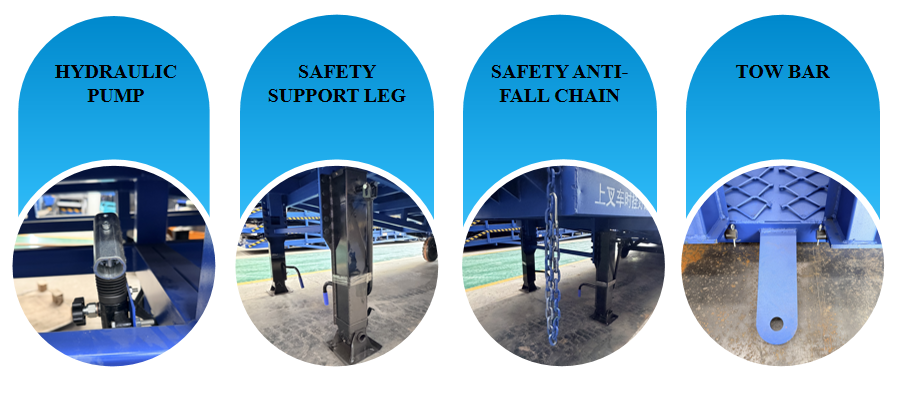
The core advantage of a mobile yard ramp is flexible relocation across loading bays. Each unit comes equipped with solid wear-resistant traction tires and a manual towing hook for single-person transport. Thick puncture-proof tires are recommended for open-air ports and rainy coastal yards, while non-marking rubber-coated tires are available for indoor epoxy floor warehouses to avoid surface scratches.
Liftable mechanical outriggers are installed on both sides of the equipment to share weight when the ramp docks with trucks. Ramps secured only by safety chains shake heavily as forklifts pass across. Heavy-duty anti-slip safety chains lock firmly onto truck frames during operation to prevent separation between the ramp and vehicle, a mandatory component required by EU CE safety certification. Low-cost entry-level loading ramp often omit outriggers and thickened rust-proof safety chains, resulting in failure to pass on-site safety audits overseas.
2.5 Surface Anti-Corrosion Coating: Adapt to Diverse Global Climates and Extend Service Life
Climate conditions vary drastically worldwide, and ramp anti-corrosion treatment directly determines equipment lifespan. For coastal, rainy, high-salt regions including the Philippines and Malaysia, forklift loading ramp must undergo full hot-dip galvanizing to resist corrosion from seawater and humid air. Sandblasted electrostatic powder coating serves as basic anti-corrosion treatment for dry inland warehouses. High-temperature, dusty regions in the Middle East require thicker paint layers and dust-proof protective covers for hydraulic pump stations.
Genuine manufacturer mobile yard ramp undergoes three complete anti-corrosion processes: rust removal, phosphating and multi-layer painting, resisting large-area corrosion for over 8 years of outdoor exposure. Cheap spray-painted ramps peel and rust within 1–2 years in coastal environments, accelerating main beam deterioration and raising long-term equipment replacement costs.
3. Three Major Global Procurement Trends for Mobile Yard Ramp in 2026
Full Adoption of Integrated Hydraulics: Manually hydraulically adjustable loading ramp has completely replaced outdated screw lifting simple ramps. Labor-saving operation and precise height adjustment drive year-on-year order growth from overseas warehouses and freight forwarding companies.
Mandatory International Compliance Certifications: Buyers from the EU, North America, the Philippines and Southeast Asia require forklift loading ramp to hold full CE safety certification and ISO9001 manufacturing qualifications. Equipment without valid certificates cannot clear customs or be put into operation at industrial facilities.
Rising Demand for Customized Site-Specific Models: Orders for compact narrow-space mobile yard ramp, explosion-proof chemical industry ramps and extra-wide heavy-duty container ramps continue to climb. Buyers no longer limit themselves to standard sizes, prioritizing precise matching between equipment and their site conditions and cargo types.
Meanwhile, the global supply chain continues shifting toward China. China exported 51,000 units of mobile loading ramps in 2024, a year-on-year increase of 14.5%. Supported by a complete industrial chain for steel processing and hydraulic components, Chinese-manufactured mobile yard ramp and forklift loading ramp deliver superior cost performance compared to locally produced alternatives in Europe and America, making China the top procurement channel for global B2B buyers.
4. Complete Manufacturing Process of Mobile Loading Ramps
A fully export-compliant mobile yard ramp and forklift loading ramp passes five core production stages, the key distinction between certified large-factory equipment and low-quality small-workshop products:
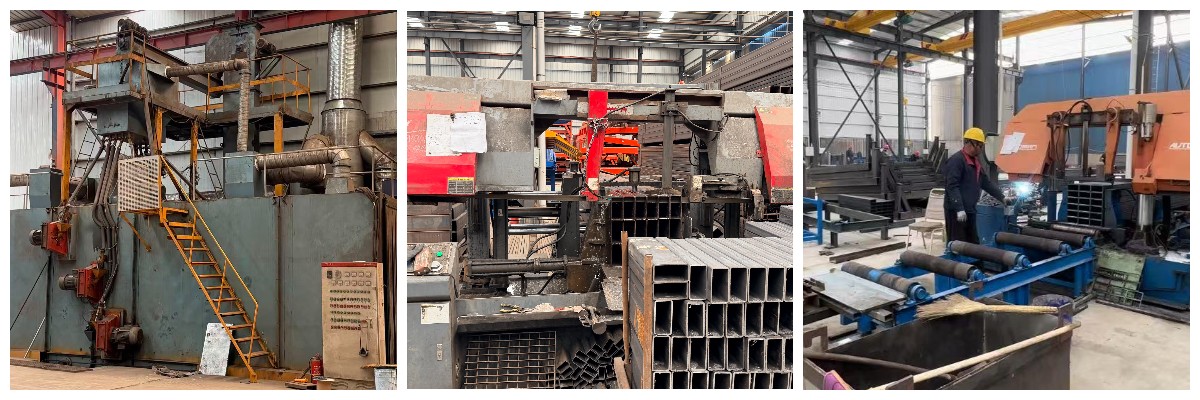
CNC Raw Material Processing: National standard Q345 manganese steel profiles are precisely cut by CNC equipment to form main beams, anti-slip deck panels, outriggers and full guardrail accessories.
Robotic Automated Welding: Industrial robots weld critical load-bearing seams on main beams and cross members, with manual touch-up welding for edge gaps. All welded joints undergo non-destructive flaw detection to eliminate hidden risks of cold welding and cracks that may cause breakage under full load.
Multi-Layer Anti-Corrosion Treatment: The whole unit undergoes full sandblasting rust removal and phosphating priming, followed by electrostatic powder coating or upgraded hot-dip galvanizing.
Full Unit Assembly: Hydraulic pump stations, traction tires, rust-proof safety chains, anti-slip guardrails and hydraulic outriggers are assembled, with full debugging of oil circuits and lifting functionality.
Multi-Round Pre-Delivery Safety Testing: All units pass three mandatory tests: no-load lifting, 120% full overload capacity and extreme tilt stability before packaging and shipment.
Small-scale processing plants universally skip non-destructive flaw detection and full-load pre-delivery testing, only completing basic welding and spray painting. Their equipment carries severe safety hazards and is unsuitable for long-term bulk overseas procurement.
5. Frequently Asked Procurement Questions From Overseas Buyers
Q1: Which loading ramp is suitable for small Filipino warehouses only handling standard 20ft/40ft containers?
The standard 10-ton mobile yard ramp with a total length of 11.4 meters and an adjustment range of 1100–1700mm is the optimal choice. It fits regular ocean freight containers, allows single-person hydraulic height adjustment, and matches the 4-ton internal combustion forklifts widely used in the Philippines, delivering the best overall cost performance.
Q2: What customized configurations are required for forklift loading ramp used at rainy coastal port yards?
Request full hot-dip galvanizing for the whole machine, waterproof and dust-proof protective covers for hydraulic pump stations, thickened puncture-resistant traction tires, and fully galvanized anti-rust safety chains and connecting pins. This full set of customized configurations drastically extends ramp service life in high-salt humid environments.
Q3: Is an 8-ton or heavier mobile yard ramp mandatory for small 1.5-ton electric warehouse forklifts?
No. Following the 1.2x total weight safety factor calculation, a 6-ton class loading ramp is sufficient to match light electric forklifts, with lower procurement costs and a lighter body for easy single-person relocation.
Q4: Does a mobile loading ramp require professional on-site installation and commissioning after delivery?
All units are fully calibrated before shipment with no complex on-site assembly required. Simply fasten the safety chain to lock onto the truck frame, manually adjust the hydraulic height to match the vehicle, and the ramp is ready for operation. General warehouse staff can operate it after brief basic training with no additional on-site installation fees.
6. Conclusion & Procurement CTA (Professional Call to Action for Global Buyers)
In summary, price comparison alone is insufficient when selecting a mobile loading ramp matched to your working conditions. You must verify five core criteria in sequence: rated load safety margin, hydraulic adjustment height, ramp travel gradient, anti-corrosion coating and complete safety protective accessories. Simultaneously, confirm the manufacturer holds international CE safety certifications and a full pre-delivery safety testing system to avoid selection pitfalls for loading ramp, forklift loading ramp and mobile yard ramp, guarantee safe forklift loading and unloading operations and reduce long-term equipment maintenance and cargo damage costs.
We are a professional original manufacturer of mobile loading ramps based in China, supplying a full range of standard 6-ton to 15-ton mobile yard ramp and site-customized forklift loading ramp. Adjustable height, ramp travel width and anti-corrosion treatments can be fully tailored to your demands. All equipment passes multiple full-load safety tests before delivery and holds CE international safety certifications, meeting procurement and customs clearance standards for warehouses, ports and manufacturing plants worldwide.
If you are unsure which loading ramp fits your warehouse or yard project, share details including site space dimensions, regular forklift tonnage, standard truck heights and local climate conditions. Feel free to contact us for one-on-one professional selection solutions, complete product specifications and accurate FOB foreign trade quotations, to make your container forklift loading and unloading operations safer, more efficient and hassle-free!