Cross Type Aerial Work Platform: Mobile Scissor Lift Platform Industry Analysis 2026
Cross Type Aerial Work Platform | Mobile Scissor Lift Platform
Explore 2026 cross type aerial work platform trends, mobile scissor lift platform specs, buyer pain points & global market insights for B2B importers.
1. Global Cross Type Aerial Work Platform Industry Background & Market Data
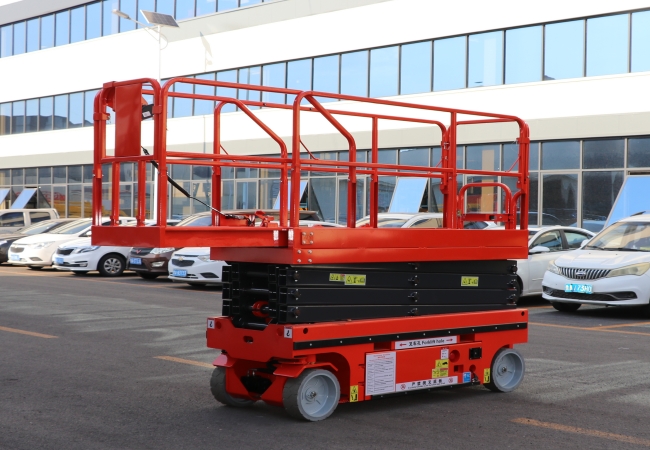
The global aerial work equipment industry has maintained steady expansion amid accelerated urban infrastructure construction, industrial upgrading, and logistics warehouse automation worldwide. As a core lightweight aerial operation device, the cross type aerial work platform mobile scissor lift platform has become indispensable standard equipment for construction, municipal maintenance, warehouse logistics, airport operation, and industrial installation sectors. Unlike fixed lifting equipment, the mobile scissor lift platform features flexible mobility, modular cross scissor structure, and adaptive working performance, solving the pain points of limited operating range and poor site adaptability of traditional aerial work devices.
Authoritative 2026 global industry data shows that the overall scissor lift aerial work platform market reached USD 3.51 billion in 2025, with a projected CAGR of 5.78% from 2026 to 2031, expected to hit USD 4.92 billion by 2031. Amo
ng all segmented products, cross type mobile scissor lift platforms occupy a 58.3% market share of mobile aerial work equipment, ranking as the largest segmented product category due to their superior stability and cost-performance ratio. Regionally, the Asia-Pacific region dominates the global market with a 38.7% revenue share, driven by vigorous infrastructure investment in Southeast Asia, the Middle East, and Oceania, while European and American markets show steady demand growth fueled by equipment renewal and safety standard upgrades .
In recent years, global industrial safety supervision has become increasingly stringent. OSHA and ANSI aerial work safety standards have been updated iteratively, forcing downstream enterprises to phase out outdated low-safety lifting equipment. This policy-driven upgrade cycle has further boosted market demand for standardized, high-safetycross type aerial work platform mobile scissor lift platform products, forming a sustainable growth momentum for the industry.
2. 2026 Global Market Development Trends of Mobile Scissor Lift Platform
2.1 Electrification & Low-Carbon Operation Become Mainstream
With the global promotion of green manufacturing and low-carbon construction policies, electric-driven cross type mobile scissor lift platforms have gradually replaced traditional fuel-powered models. Industry statistics indicate that over 52% of newly launched scissor lift products in 2025–2026 adopt full-electric drive systems, featuring zero on-site emissions and low noise operation below 65dB(A), fully complying with indoor construction, mall maintenance, and closed warehouse operation standards. This trend has become a core procurement consideration for European, American, and Australian B2B buyers .
2.2 Intelligent & Safety Standardization Upgrade
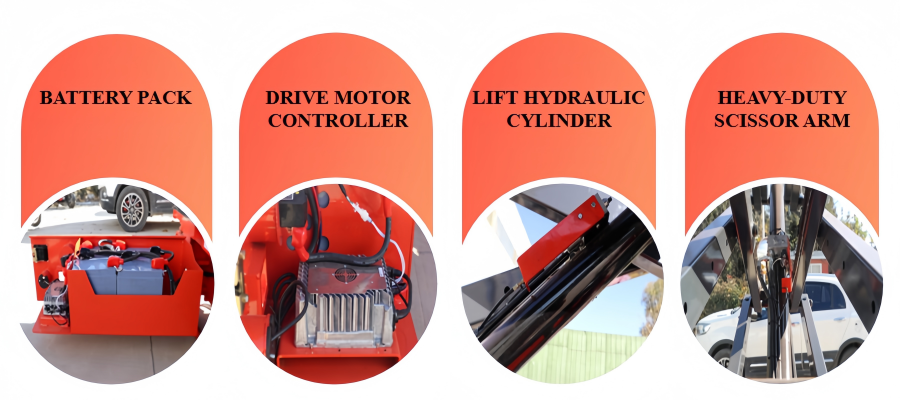
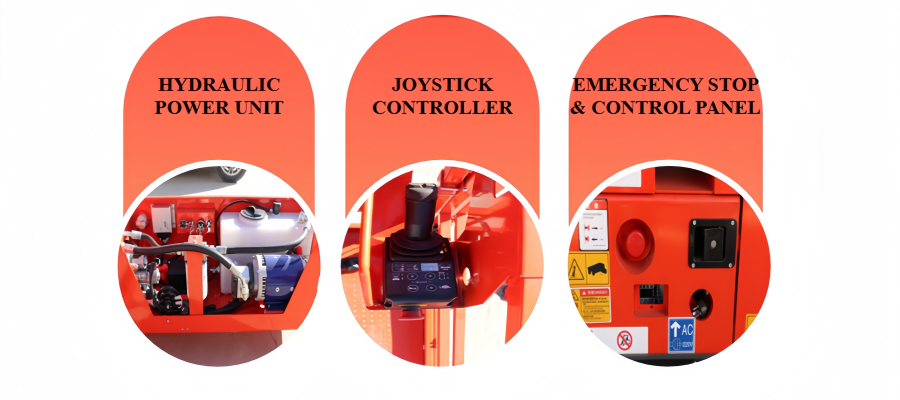
Modern cross type aerial work platform mobile scissor lift platform products are increasingly equipped with intelligent monitoring systems, including overload hydraulic safety protection, emergency descent devices, tilt alarm systems, and anti-fall protection mechanisms with a response speed within 0.3 seconds. In addition, more than 28% of mid-to-high-end products have integrated telematics technology, realizing remote equipment status monitoring, fault early warning, and operating data statistics, which greatly improves equipment management efficiency for rental enterprises and large engineering contractors .
2.3 Diversified Adaptation for Complex Scenarios
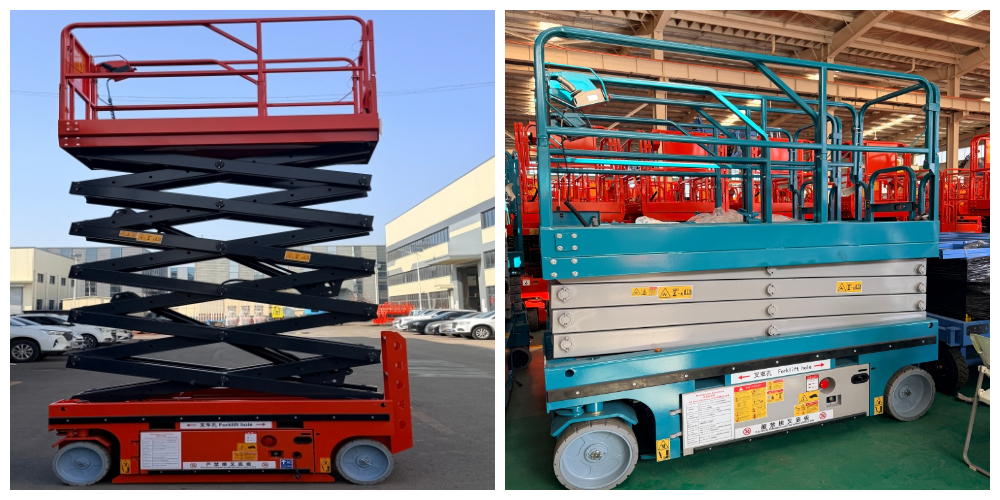
Market demand is gradually moving towards personalized and scenario-based customization. Standard wheeled mobile scissor lifts are suitable for flat indoor sites, while upgraded cross-type reinforced models and crawler-type mobile scissor lifts can adapt to rough terrains such as construction sites, muddy roads, and gravel ground. The diversified product layout enables cross type aerial work platforms to cover full-scenario aerial operation needs, from indoor fine maintenance to outdoor large-scale construction
.
3. Core Technical Parameters & Product Structure Advantages
The excellent market competitiveness of the cross type aerial work platform mobile scissor lift platform stems from its mature mechanical structure and standardized technical parameters, which meet international industry certification standards and global user operating needs.
3.1 Key Standard Technical Parameters
Conventional cross type mobile scissor lift platforms cover lifting heights from 6m to 20m, with rated load capacity ranging from 300kg to 2000kg, meeting the load requirements of simultaneous operation for 2–4 workers plus construction tools. The stowed travel speed is ≤5.0km/h, while the elevated operating speed is controlled within 0.8km/h to ensure operational stability. The platform size ranges from 1.5m×3m to 2.5m×6m, with customizable extended platforms to expand operating space. The mainstream power configuration is 380V/3KW electric drive, supporting 6–8 hours of continuous stable operation, fully adapting to long-hour industrial operation scenarios .
3.2 Unique Cross Scissor Structure Advantages
Different from ordinary single scissor lift platforms, the core feature of cross type aerial work platforms is the reinforced cross scissor telescopic structure. This optimized mechanical design disperses vertical and horizontal pressure evenly, effectively improving the overall stability and anti-tilt performance of the equipment during high-altitude operation. The high-strength manganese steel scissor arm undergoes integral stamping and anti-rust treatment, with strong compression resistance and deformation resistance, extending the equipment service life by more than 30% compared with ordinary models. Meanwhile, the foldable cross structure reduces the stowed volume, facilitating convenient transportation and storage for cross-border buyers .
4. Manufacturing Process & Typical Application Procedures
4.1 Standardized Manufacturing Process
High-quality cross type aerial work platform mobile scissor lift platform products adopt a standardized international manufacturing process. The whole process includes raw material screening of high-strength manganese steel, precision laser cutting, integral welding forming, stress relief treatment, surface electrostatic spraying, hydraulic system assembly, electrical system debugging, and strict factory safety testing. Each equipment undergoes overload testing, anti-fall testing, and continuous lifting cycle testing before delivery to ensure compliance with CE, ISO and other international certification standards, effectively reducing equipment failure rates in overseas use .
4.2 Industry Application Procedures & Scenarios
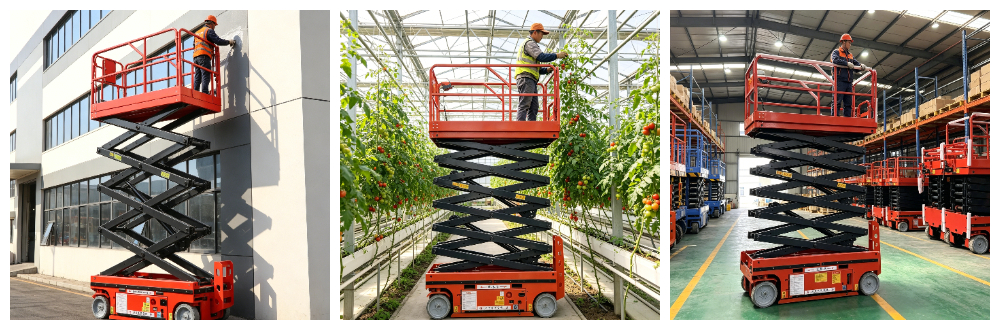
This mobile scissor lift platform is widely used in multiple global industries with standardized operating procedures. In construction engineering, it is applied for high-altitude wall construction, curtain wall installation, and exterior wall maintenance; in logistics warehousing, it is used for high-level goods sorting, shelf installation, and equipment maintenance; in municipal engineering, it adapts to street lamp maintenance, traffic facility installation, and greening trimming; in airports and industrial parks, it is used for pipeline maintenance, electrical installation, and ceiling finishing. The mobile design enables rapid position switching, greatly improving the efficiency of high-altitude operations and reducing manual operation risks .
5. International Buyers’ Procurement Preferences & Core Pain Points
5.1 Main Procurement Preferences of Global B2B Buyers
Through in-depth analysis of overseas cross-border trade data, international buyers of cross type aerial work platform mobile scissor lift platform mainly focus on four core dimensions: first, international certification qualifications, requiring products to pass CE, ISO, and local safety standard certification to meet market access requirements; second, product stability and safety configuration, prioritizing models with complete overload protection, emergency descent and anti-tilt functions; third, cost-performance and durability, favoring high-strength materials and long-service-life products to reduce later maintenance costs; fourth, customized service capability, including size adjustment, power configuration optimization, and logo customization .
5.2 Core Procurement Pain Points & Solutions
The first common pain point is uneven product quality in the international market. Many low-end products have insufficient structural strength and incomplete safety configurations, which cannot meet strict European and American safety standards and are prone to operational risks. The second pain point is inadequate after-sales service. Cross-border buyers face difficulties in equipment maintenance, parts replacement, and technical guidance. The third pain point is poor scenario adaptability. Ordinary scissor lifts cannot adapt to complex terrains and special working environments, resulting in low equipment utilization. High-quality cross type mobile scissor lift platforms solve the above problems through standardized production, complete safety configurations, global after-sales support, and scenario-based customized solutions, becoming the preferred choice for overseas bulk procurement .
6. B2B Frequently Asked Questions (FAQs)
Q1: What certifications do cross type aerial work mobile scissor lift platforms have for overseas sales?
A: Our cross type aerial work platform mobile scissor lift platform fully complies with international standards, with complete CE, ISO9001 quality management system certification, and EU safety certification. All products pass strict factory safety tests, meeting market access requirements in Europe, America, Southeast Asia, the Middle East and other regions, supporting global customs clearance and local safety inspections.
Q2: Can the mobile scissor lift platform be customized for special working scenarios?
A: Yes. We support personalized customization of lifting height, load capacity, platform size, power mode (full electric/hybrid), and anti-slip and anti-corrosion treatments. Custom crawler-type cross scissor models are also available for rough terrain operation to meet diverse scenario needs of overseas construction, municipal and logistics enterprises.
Q3: What is the service life and daily maintenance method of the cross type scissor lift platform?
A: The high-strength manganese steel cross structure ensures a service life of more than 8 years under normal use. Daily maintenance is simple: regular hydraulic oil replacement, electrical circuit inspection, and scissor arm dust removal and lubrication. We provide overseas customers with detailed English maintenance manuals and remote technical guidance.
Q4: What is the delivery cycle and after-sales support for bulk orders?
A: Conventional standard models support 7–15 days fast delivery, and customized models take 15–25 working days. We provide global after-sales service, including free technical consultation, equipment installation guidance, one-year warranty, and lifelong paid maintenance services, solving cross-border after-sales pain points for buyers.
7. Professional Call to Action
As the global demand for high-standard aerial work equipment continues to rise, the cross type aerial work platform mobile scissor lift platform has become a high-growth and high-cost-performance product for global B2B procurement. If you are looking for reliable cross-border suppliers of mobile scissor lift platforms, please contact our professional international trade team immediately. We can provide you with detailed technical parameter documents, real product test reports, customized quotation plans, and free sample verification services. Our team will offer one-stop professional solutions according to your local application scenarios, safety standard requirements, and procurement volume, helping you reduce procurement costs and improve product market competitiveness.