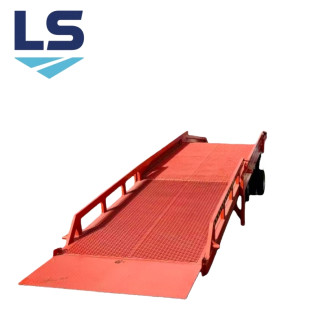
Mobile Loading Ramp: Boost Handling Efficiency, Ideal for Warehouses Without Fixed Docks
Mobile Loading Ramp: Boost Handling Efficiency for Warehouses Without Loading Docks
Explore industry trends, core advantages & manufacturing tech of loading ramp, portable container ramp, loading dock ramp. Cover global factory & logistics applications with buyer FAQs.
1. Global Market Background & Growth Trend of Loading Ramps
Against the backdrop of restructured global supply chains and booming cross-border e-commerce post-pandemic, numerous small & medium overseas manufacturers and 3PL warehouses were built without dedicated loading docks. Low efficiency in ground-level loading and costly civil renovation fuel sustained demand for mobile loading ramps. Loading ramp, portable container ramp and loading dock ramp have become indispensable logistics equipment for dock-free warehouses.
Data from research firm Dataintelo shows the global mobile loading ramp market reached USD 1.67 billion in 2025, projected to surpass USD 2.67 billion by 2034 with a steady CAGR of 5.2%. The Asia-Pacific region accounts for 38.5% of market share. Key buyers include export factories in Thailand, Malaysia, Vietnam, plus small-to-medium warehouses in the US and Europe. Hydraulic loading ramps hold 42.3% market share thanks to universal adaptability.
1.1 Three Core Drivers of Surging Market Demand
Limited infrastructure budget for overseas small factories
Surveys reveal over 65% of newly built overseas plants and temporary storage lack permanent loading docks. Constructing fixed docks later costs tens of thousands of US dollars and takes more than half a month. Portable container ramps eliminate civil construction work and can be used right after delivery, perfectly solving budget constraints.
Urgent demand for faster container loading & unloading
Simple steel plates only allow manual pallet handling with low speed and high cargo damage risk. Standard loading dock ramps enable forklifts to drive directly into 20GP & 40GP containers, tripling loading efficiency and easing congestion during peak order seasons.
Tightened workplace safety regulations worldwide
EU EN1398 standards and local inspection rules in Southeast Asia mandate anti-slip, anti-shift protection on loading ramps. Compliant loading ramps help factories avoid injury fines and cut insurance premiums.
1.2 Technical Upgrade Trends of Loading Ramps
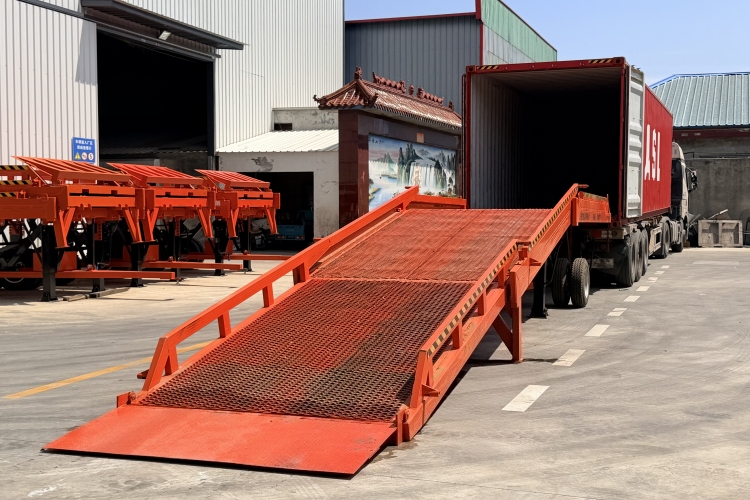
Outdated mechanical portable container ramps are phased out, with hydraulic infinitely variable lifting structures dominating the global market. For tropical rainy and coastal salt-spray areas (Bangkok, Laem Chabang, Manila yards), manufacturers offer full hot-dip galvanizing to prevent rust for outdoor deployment.
Load capacities are standardized from 8 to 30 tons, matching mainstream 5-ton internal combustion forklifts abroad. The 3-fold lightweight design is a top export seller, saving container space and lowering clients’ ocean freight costs.
2. Two Core Values of Mobile Loading Ramps: Higher Efficiency & Dock-Free Compatibility
2.1 Greatly Improve Container Throughput & Cut Labor & Time Costs
Loading ramps fundamentally fix low-efficiency pain points for ground-level warehouses. Without portable container ramps, workers manually move pallets into containers, taking 4–6 hours to fully load a 40ft container. With hydraulic loading dock ramps, one forklift operator can finish a full container within 2 hours, lifting daily container throughput by 2–3 times.
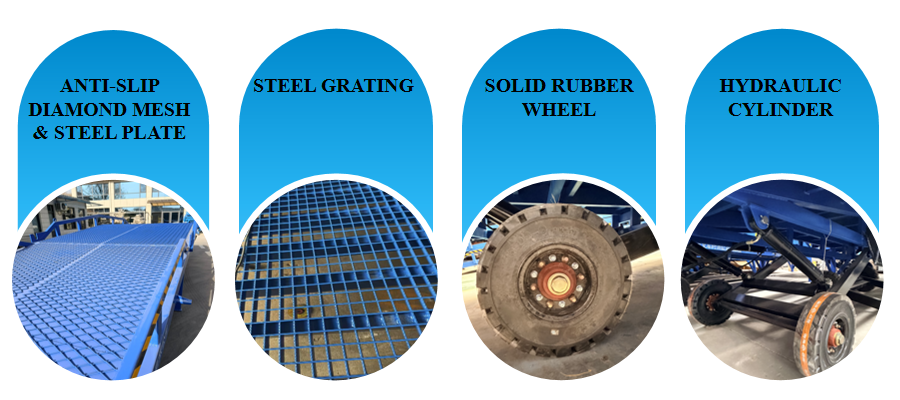
For Southeast Asian small factories handling around 30 containers monthly, mobile loading ramps save over 80 labor hours monthly while reducing pallet collision and cargo drop losses. Diamond anti-slip grating and 20% overload safety margin guarantee stable forklift transit and avoid sliding or tipping delays.
2.2 No Civil Construction Required, Flexible for All Dock-Free Facilities
This is the key competitive edge of portable container ramps over fixed loading docks. Permanent loading docks require pit excavation, load-bearing concrete pouring, wall reinforcement and wiring, which are impractical for rented workshops, temporary yards and small manufacturers.
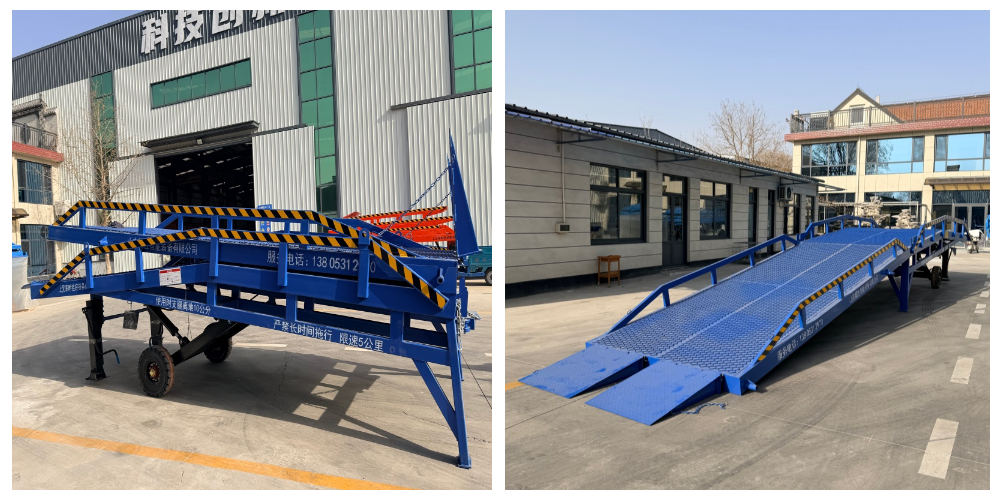
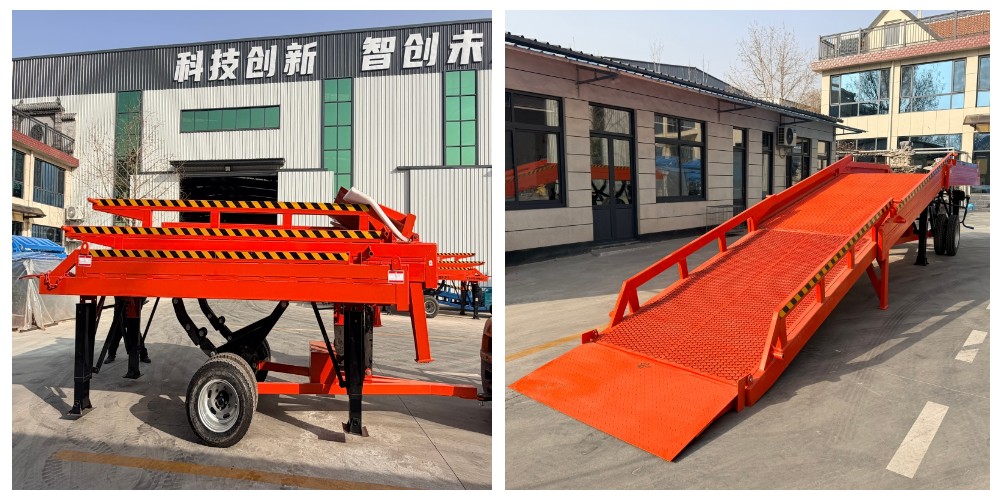
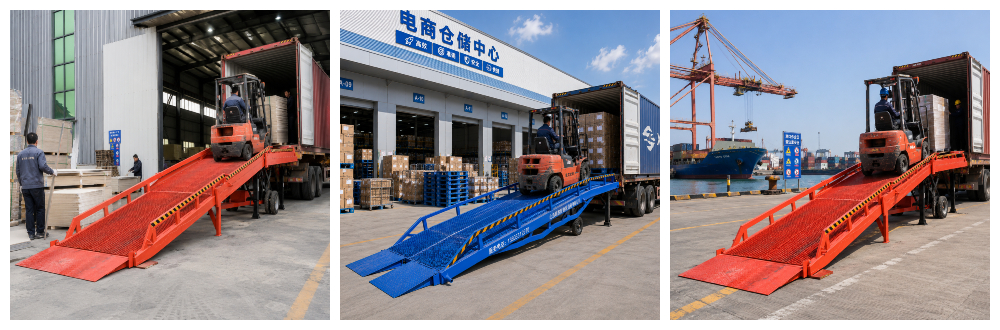
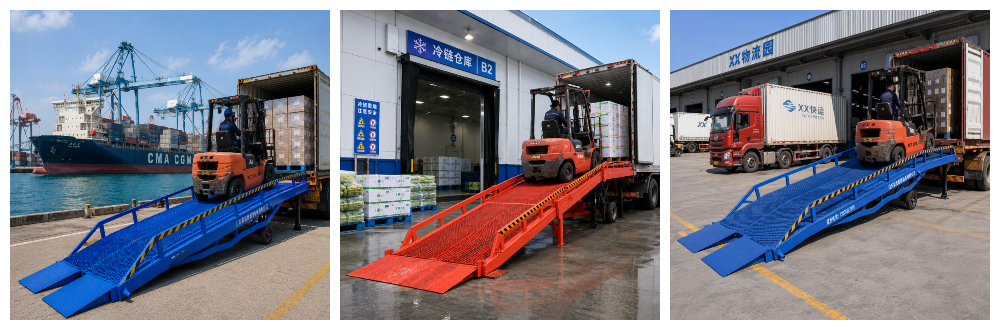
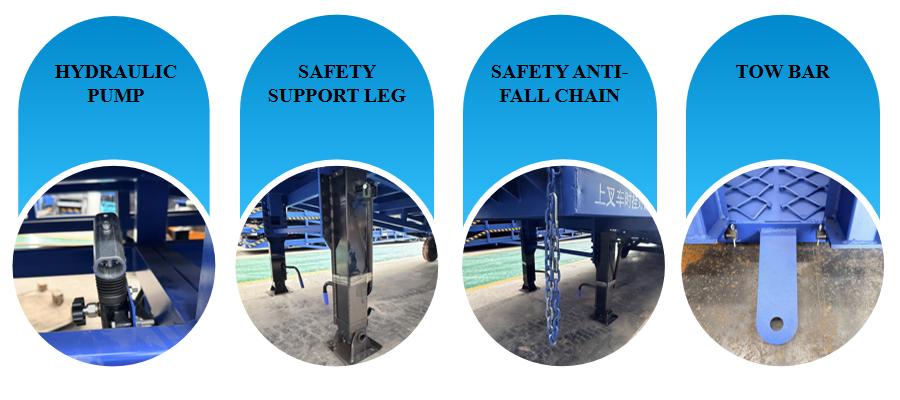
Mobile loading ramps come with solid traction wheels and forklift draw slots, ready for use on flat hardened ground with zero construction work. Folded 3-fold models occupy minimal space and can be towed across the plant to serve multiple container bays. Warehouses and multi-workshop factories avoid purchasing one ramp per bay, slashing equipment investment.
Hydraulic lifting range covers 1100mm–1700mm, compatible with standard shipping containers, light vans and heavy semi-trailers. Operators adjust ramp height via hydraulic handles to bridge any ground-truck height gap for all ground-level loading scenarios.
3. Application Scenarios for Loading Ramp, Portable Container Ramp & Loading Dock Ramp
3.1 Import & Export Manufacturing Plants (Largest Buyer Group)
Auto parts, plastic mold, furniture and food export factories are core buyers of loading dock ramps, most constructed without loading docks. 6–10 ton portable container ramps fit mainstream 5-ton forklifts for full pallet container loading. Heavy machinery factories select 12–15 ton heavy-duty loading ramps for oversized component transport. Repurchase rates stand above 40% in Southeast Asian and European manufacturing plants year-round.
3.2 Cross-Border E-Commerce & Port 3PL Warehouses
Overseas e-commerce warehouses and port temporary yards handle high container turnover with variable parking positions, so portable container ramps can be towed to any bay. One loading ramp serves multiple LCL containers simultaneously to ease space shortages. Outdoor yards in Bangkok, Manila widely adopt hot-dip galvanized ramps to resist high temperature, rain and coastal salt corrosion.
3.3 Agricultural Processing Plants & Temporary Project Sites
Fruit, vegetable and grain factories have scattered loading zones that fixed docks cannot cover. Lightweight 8-ton loading dock ramps are easy to lift and move by single staff, with anti-slip surfaces preventing fresh pallet damage. Construction sites and exhibition temporary storage have no permanent loading areas, making mobile loading ramps cost-effective for short-term rental or purchase.
4. Standard Manufacturing & Pre-Shipment Testing for Export-Grade Loading Ramps
Overseas B2B buyers prioritize product quality control. Every portable container ramp follows standardized production and testing before shipment to guarantee stable long-distance operation:
CNC steel cutting: Q345 high-tensile manganese steel main beams & anti-slip grating cut precisely within 2mm tolerance
Robotic full penetration welding: seamless frame welding to resist deformation under long-term heavy loads
Anti-corrosion treatment: standard sandblasting + electrostatic powder coating; optional full hot-dip galvanizing for 8-year outdoor rust resistance
Hydraulic assembly: waterproof power units tested for thousands of lift cycles to eliminate leakage or jamming
Safety accessory installation: side guardrails, container safety lock chains, load-bearing support legs & traction wheels fully fitted
Overload inspection: each loading ramp undergoes 24-hour static testing at 1.25x rated load to pass deformation & leak checks
Complete packaging documents: CE certificates, material test reports & operation manuals included for customs clearance worldwide
5. Frequently Asked Questions from Overseas Buyers
Q1: What’s the difference between loading ramp, portable container ramp and loading dock ramp?
A: They are different industry terms for the same equipment. Loading ramp is the universal general name; portable container ramp refers to foldable portable models for container use; loading dock ramps feature longer hydraulic strokes and higher load capacities matching fixed dock performance. All three terms are interchangeable in inquiries and communication with identical core structure & functions.
Q2: Can portable container ramps work on dirt or gravel ground?
A: Not recommended. Soft unhardened ground will sink or tilt under heavy forklifts, creating safety hazards. Clients can lay steel plates for simple ground hardening, or order wide base models to disperse weight for stable operation.
Q3: How to select the correct loading ramp tonnage based on your forklift?
A: Selection formula: Ramp rated load ≥ forklift weight + full cargo weight. A common 4-ton forklift with 2 tons of goods totals 6 tons, requiring a minimum 6-ton portable container ramp. For heavy pallet transport, add 2 tons safety margin and choose 10-ton or 15-ton loading dock ramps.
Q4: What custom upgrades are needed for Southeast Asia’s hot, rainy climate?
A:
Full hot-dip galvanizing instead of standard powder coating to resist rain and coastal salt spray
Waterproof dust covers for hydraulic power units to avoid breakdowns in humid environments
Thickened anti-slip grating with drainage holes to prevent water pooling & slipping on rainy days
Stainless steel safety lock chains to avoid rust jamming during long outdoor use
6. Conclusion & Purchase Call to Action (CTA)
Global demand for dock-free warehouse retrofits keeps rising. Loading ramp, portable container ramp and loading dock ramp cut costs and boost productivity with two core strengths: faster cargo handling and zero civil construction, rapidly replacing costly fixed docks as essential logistics gear for export factories and logistics yards.
If you are a purchasing manager from overseas manufacturing plants, cross-border e-commerce warehouses or freight yards seeking mobile loading ramps matching your local container and forklift conditions, contact us directly with your site dimensions, forklift tonnage and target destination country. We provide free customized portable container ramp selection plans, full spec sheets and CIF port quotations. Custom load capacity, deck width and anti-corrosion finishes are available, with complete CE clearance documents for smooth customs worldwide. As a direct factory, we offer stable full-container & LCL shipments all year round.