Road Blocker
1. Exceptional Anti-Ramming Performance
2. Fast & Precise Operation
3. Intelligent Control & Integration Capability
4. Robust Durability & Weather Resistance
5. Enhanced Safety Features
6. Customizable Design for Diverse Scenarios
7. Low Operational & Maintenance Costs
Product Introduction
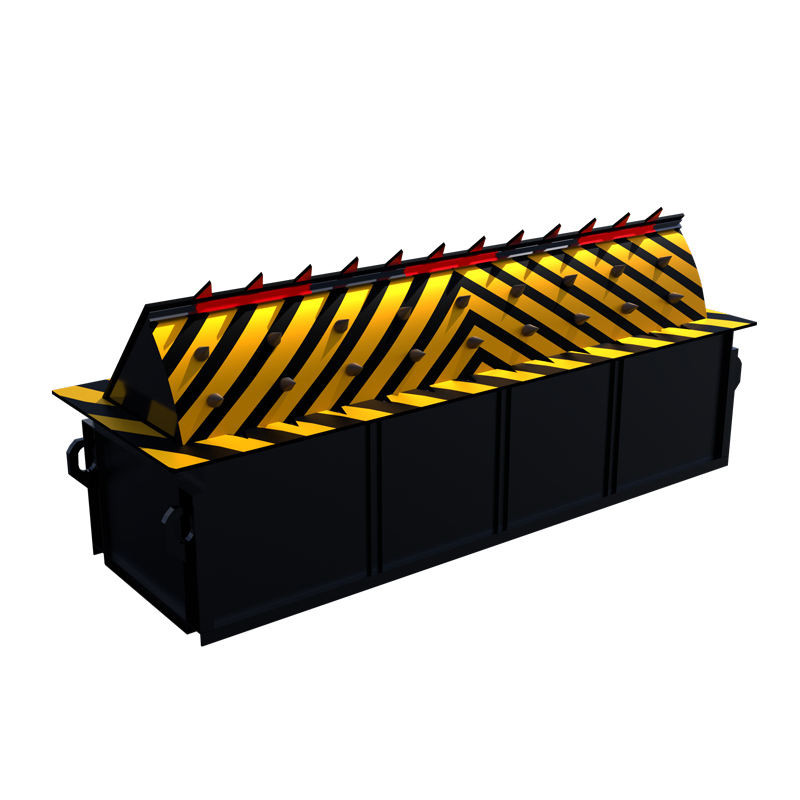
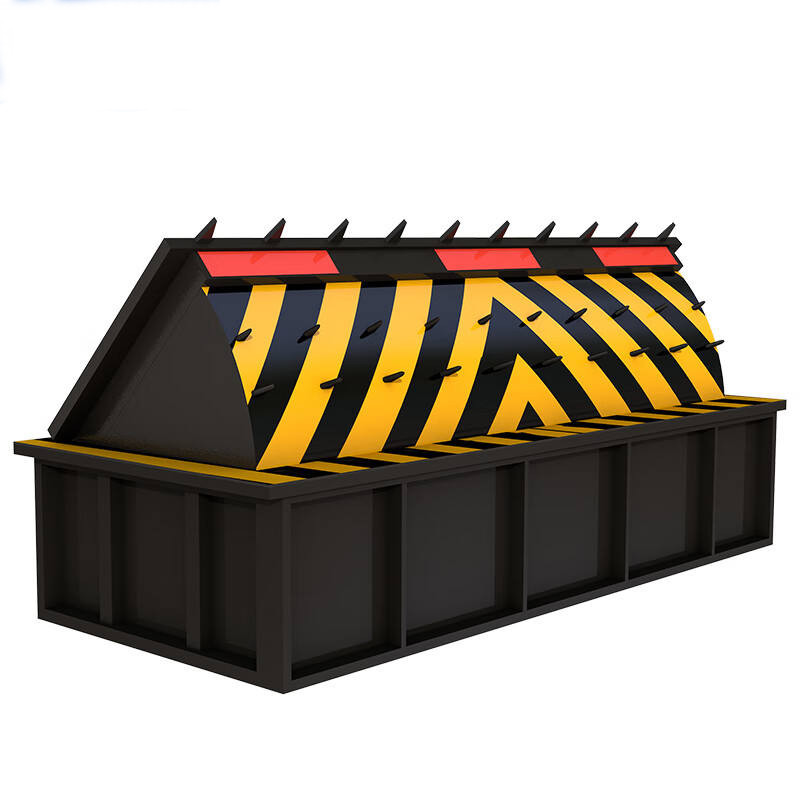
Road blocker is an intelligent road facility that integrates security protection and traffic control. It is mainly used to intercept illegal vehicles and regulate the traffic order in specific areas. It is the core security equipment to ensure the safety of personnel and property in key places. It has become a standard security equipment for government agencies, transportation hubs, industrial parks, and other areas due to its flexible control methods and strong impact resistance, which can be widely adapted to different security levels of application scenarios.
1. Hydraulic lifting type barrier
This is currently the most widely used type, with hydraulic system as the core power source, fast lifting response speed, and single lifting time can be controlled within 3-8 seconds. Its main body is made of high-strength alloy steel material, which has extremely strong impact resistance and can effectively resist malicious collisions from heavy vehicles. This type supports three control modes: manual, automatic, and remote control. It can also be linked with barrier gates, license plate recognition systems, and monitoring equipment to achieve an automated security loop of "recognition release interception". At the same time, the device has good waterproof and dustproof performance (with a protection level of up to IP68), and can adapt to harsh outdoor environments. It can also operate stably in low temperature environments in winter.
2. Fixed road pile type barrier
Adopting integrated pouring or pre embedded installation technology, the main body is made of solid alloy steel or stainless steel material, with a stable structure and strong resistance to damage. It is mainly used for road sections with long-term restricted or prohibited traffic, such as pedestrian street entrances, community fire exits, campus entrances and exits, etc. This type does not require a power system, and does not require frequent maintenance after installation. It has a high cost performance ratio, and some products can also be designed as detachable to meet emergency travel needs.
3. Flip type blocker
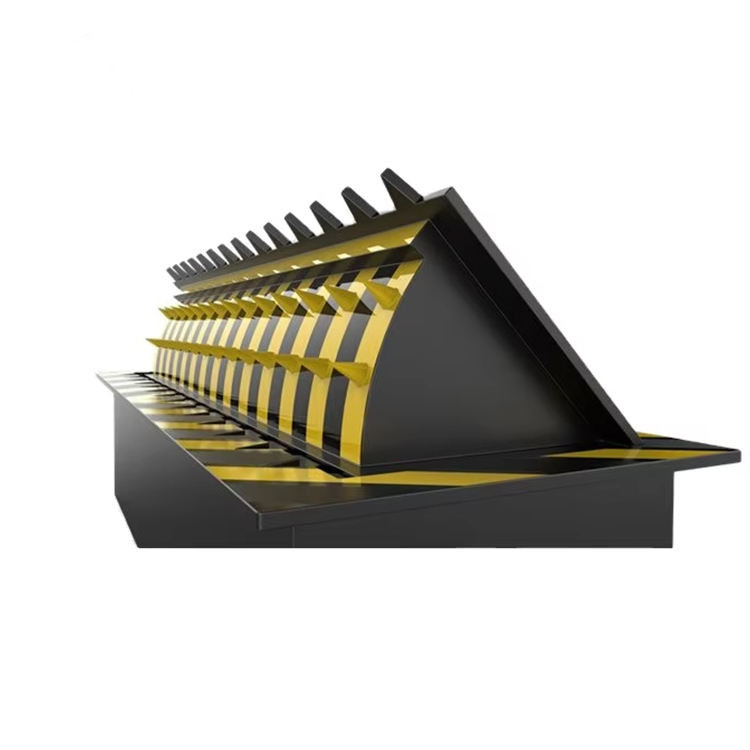
Also known as flip type roadblocks, they switch between "pass stop" states through mechanical flipping. Its blocking surface usually has anti slip stripes or pointed structures, which provide intuitive interception effects. This type has a fast switching speed and is suitable for temporary control scenarios, such as large-scale event sites, temporary road closures, logistics park entrances and exits, etc. It can quickly release authorized vehicles and intercept illegal intruders in case of emergencies.

Working Principle
1. Hydraulic lifting type barrier
Power core: driven by hydraulic system, composed of hydraulic pump, hydraulic cylinder, oil tank, solenoid valve and other components.
Workflow: Upon receiving a release/interception command (manual button, remote signal, or license plate recognition linkage signal), the solenoid valve controls the hydraulic pump to start, and the hydraulic oil is pressurized and delivered to the hydraulic cylinder; The piston inside the hydraulic cylinder is pushed by hydraulic oil, which drives the main body of the barrier pile/barrier machine connected to it to rise, forming a barrier to intercept the vehicle; When clearance is required, the hydraulic system operates in reverse, and the hydraulic cylinder drives the blocking structure to descend to level with the ground, allowing the vehicle to pass normally.
Auxiliary mechanism: equipped with position sensors to accurately control the lifting height and limit, avoiding excessive lifting; Set up an emergency manual descent device, which can use a manual oil pump or hand cranked mechanism to achieve forced descent of the blocking structure during power outages, ensuring emergency passage.
2. Fixed road pile type barrier
Core logic: Non powered driving system, relying on the stability of physical structure to achieve blocking function.
Workflow: During installation, the main body of the road pile is fixed at a predetermined position on the ground by embedding sleeves or pouring concrete. The road pile is raised a certain height above the ground (usually 30-60cm), directly forming a physical barrier to prevent vehicles from entering; Detachable fixed road piles are equipped with snap fasteners or bolt connections between the base and the road piles. When temporary release is required, the connecting components can be manually disassembled and the road piles can be removed.
Key support: The main body of the road pile is made of solid alloy steel or stainless steel material, paired with a deep buried base, which uses its own weight and structural strength to resist vehicle impact, without the need for additional power to maintain a blocking state.
3. Flip type blocker
Power type: divided into two types: electric and hydraulic, with the driving components being electric motors or small hydraulic systems.
Workflow: The blocking structure is a reversible metal plate (flap), which is normally laid flat on the ground without affecting vehicle traffic; After receiving the interception command, the driving component drives the rotating shaft of the flipping board to rotate, causing the flipping board to flip upwards to a vertical state, forming a car barrier. Some flipping boards have anti slip patterns or anti impact spikes on their surfaces, enhancing the interception effect.
Limit protection: Equipped with both mechanical and electronic limit devices, it ensures precise flipping angle (usually 90 °) of the flipping plate, avoiding structural damage caused by excessive flipping.
Product Application
1. Hydraulic lifting type barrier - high safety protection level scenario
Government agencies/military and police units, such as municipal government buildings, public security bureaus, border inspection stations, etc., can be linked with license plate recognition, facial recognition, and monitoring systems to achieve "automatic release of authorized vehicles and rapid interception of illegal vehicles" and resist malicious intrusion risks.
Transportation hubs/key venues: such as airports, high-speed railway stations, large sports venues, and exhibition centers, adapted to the characteristics of high traffic flow and dense personnel, supporting rapid lifting and lowering, balancing traffic efficiency and security needs, and manually descending in case of power outages to ensure smooth evacuation routes.
Core areas of energy/finance, such as nuclear power plants, refineries, bank vaults, and data centers, have extremely high security requirements. The impact resistance of hydraulic lift type barriers (which can withstand collisions from tens of tons of heavy vehicles) can effectively build a safety defense line.
Industrial park/high-end factory area: Especially for parks involving precision manufacturing and hazardous material production, it is used for entrance and exit control to prevent unrelated vehicles from entering and protect the safety of equipment and personnel in the production area.
2. Fixed road pile type barrier - normalized restricted driving scenario
Pedestrian Street/Commercial Block: Installed at the entrance of the block, forming a fixed physical barrier that prohibits motor vehicles from entering, ensuring pedestrian safety, and creating a pedestrian friendly consumption environment.
Campus/community entrance and exit: Fixed road stakes are set up at the campus entrance to prevent vehicles from entering the campus; Detachable road stakes are installed at the entrance of the community's fire exits, which are restricted to traffic during normal times and can be quickly dismantled in emergency situations to ensure the passage of fire trucks.
Park/Scenic Area Trail: Used to separate motor vehicle lanes from pedestrian walkways, prevent vehicles from entering the core tourist area of the scenic area, and protect the ecological environment and tourist safety.
3. Flipped Barrier - Temporary Control Scenario
Large scale event venues, such as concerts, marathon races, and festival markets, are temporarily set up on the surrounding roads of the event area to quickly switch between "release intercept" states. During the event, social vehicles are intercepted and traffic resumes after the event ends.
Temporary closure of road sections: such as road construction and emergency rescue sites, used to temporarily control traffic flow, guide vehicles to detour, and ensure the safety of construction personnel and rescue work.
Temporary passage in logistics park/port: used at the temporary entrance and exit of the park to quickly release authorized internal vehicles and intercept unrelated external vehicles, balancing the flexibility and convenience of temporary control.
Company Strengths
We are not ordinary roadblock manufacturers, but "intelligent defense designers" for global high safety scenarios - focusing on disruptive innovation in road blocking technology, providing a three in one vehicle control solution of "physical protection+intelligent perception+data decision-making" for core fields such as government, transportation, and energy, making every obstruction precise, efficient, and safe.

FAQ
1. Question: Is the installation cycle of road blockers long?
Answer: The installation of conventional hydraulic lifting models takes 1-2 days, while modular quick installation models can be completed in 4 hours without the need for extensive damage to the road surface.
2. Question: Can the blocker still function normally after a power outage?
Answer: The hydraulic model is equipped with a manual emergency descent device, which can be manually operated to release in case of power failure; Fixed and flip versions have no power dependence and do not affect the basic blocking function.
3. Question: Which type of fire escape is suitable for use in the community?
Answer: Priority should be given to detachable fixed road stakes. During normal times, traffic restrictions are implemented to ensure safety. In emergency situations, they can be quickly dismantled within 30 seconds without affecting the passage of fire trucks.
4. Question: What should be paid attention to in daily maintenance?
Answer: Check the hydraulic oil level and clean the dust on the equipment surface once a month; Conduct an annual overall structural inspection to ensure that the components are not loose.
5. Question: What is the impact resistance of the product?
Answer: Counter terrorism grade hydraulic roadblocks can withstand impacts from 80 ton heavy vehicles at a speed of 60km/h, with an intrusion distance of ≤ 0.5 meters, meeting high security requirements.