What Is a Mobile Loading Ramp Used For? Full Application & Professional Buying Guide
Mobile Loading Ramp: Uses & Complete Industry Application Guide
Explore applicable scenarios, market trends & specs of mobile loading ramp, portable loading ramp, mobile loading dock, with common purchasing FAQs for overseas factories.
1.Global Industry Background & Market Growth of Mobile Loading Ramps
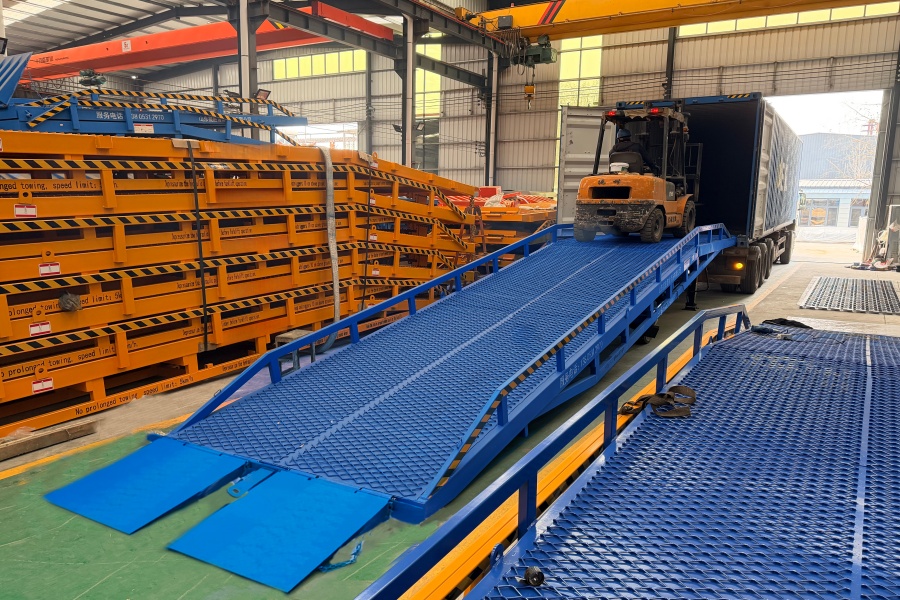
With continuous expansion of global cross-border manufacturing, third-party logistics and cross-border e-commerce warehouses, numerous small & medium factories, leased storage facilities and temporary port yards were built without permanent fixed loading docks. Low efficiency for ground-level container handling and expensive civil renovation have become universal pain points across the warehousing sector. As civil-work-free flexible loading equipment, mobile loading ramps, portable loading ramps and mobile loading docks see steady year-on-year demand growt.
1.1 Core Trends of Industrial Technical Upgrades
Simple mechanical ramps have been fully phased out from the market, with hydraulically adjustable mobile loading ramps claiming a 42% mainstream market share. Two clear upgrade directions stand out:
First, upgraded anti-corrosion treatments. For rainy, coastal tropical markets such as Thailand and Malaysia, hot-dip galvanized portable loading ramps are gradually replacing standard powder-coated versions, doubling outdoor service life.
Second, lightweight foldable structures are widely adopted. 3-fold mobile loading docks occupy less space in sea containers, drastically cutting clients’ international freight costs and ranking as the fastest-growing export model in recent years. Heavy-duty models equipped with waterproof hydraulic power units and a 20% safety overload margin maintain steady repurchase rates among buyers.
1.2 Core Pain Points & Purchasing Preferences of International Buyers
Based on years of export experience, purchasing managers from overseas factories and freight yards face four key pain points: long renovation cycles for fixed docks, prohibited civil construction at leased plants, lack of flexible loading equipment for multiple container bays, and high maintenance costs from long-term rust on outdoor ramps.
These challenges shape consistent purchasing preferences:
Prioritize mobile loading ramps compatible with standard 20GP/40GP containers and local 3–5 ton internal combustion forklifts;
Require complete safety assemblies and full CE certification documents for customs clearance;
Prefer towable portable loading ramps that can be moved across the entire plant by forklift;
Clients in hot coastal regions actively customize hot-dip galvanized mobile loading docks, rejecting low-cost non-standard products with shoddy workmanship and no quality inspection.
2. Core Structure & Standard Technical Parameters of Mobile Loading Ramp, Portable Loading Ramp & Mobile Loading Dock
2.1 Overall Product Structural Design
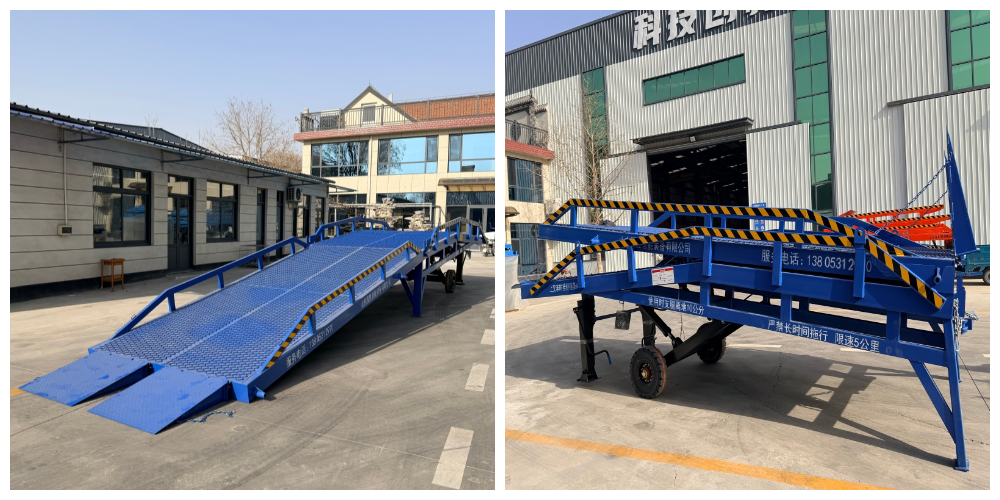
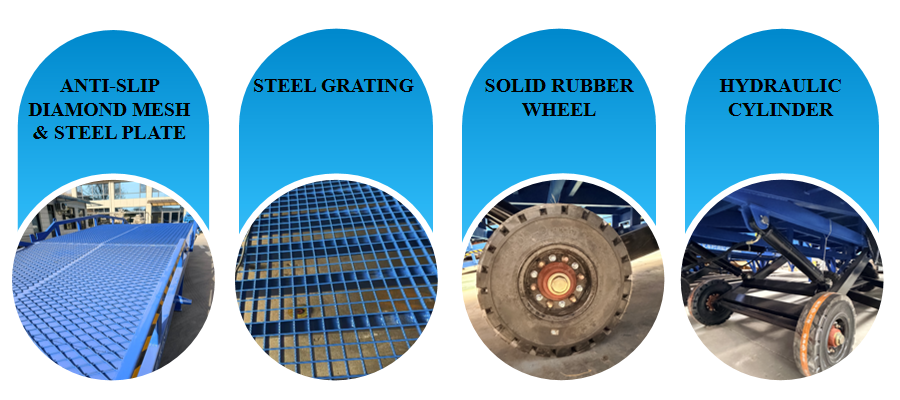
Export-grade mobile loading ramps adopt an integrated welded frame with Q345 manganese steel main beams. Robotic full penetration welding eliminates stress gaps, and a 20% safety overload margin is reserved for rated load capacity, preventing permanent bending deformation of main beams under repeated full forklift traffic. The deck features diamond anti-slip grating with built-in drainage holes to avoid water pooling and slipping during rainy operations.
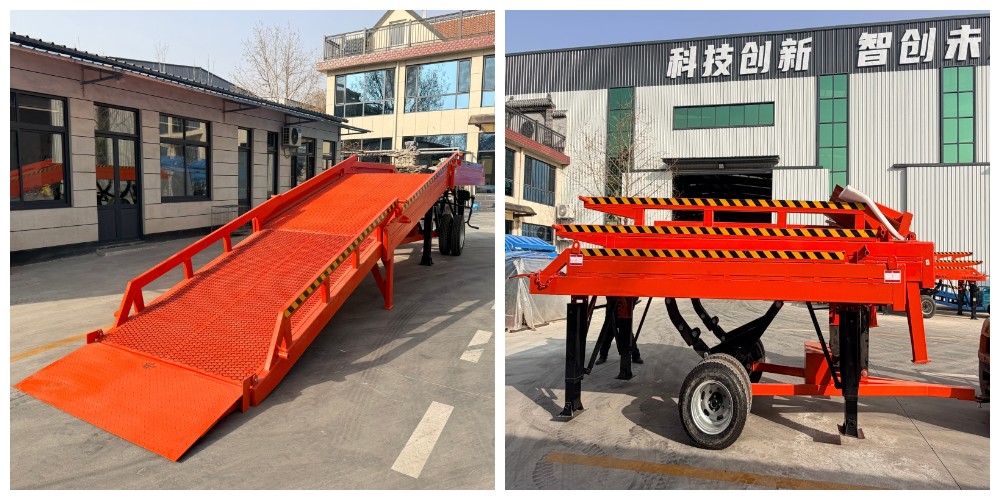
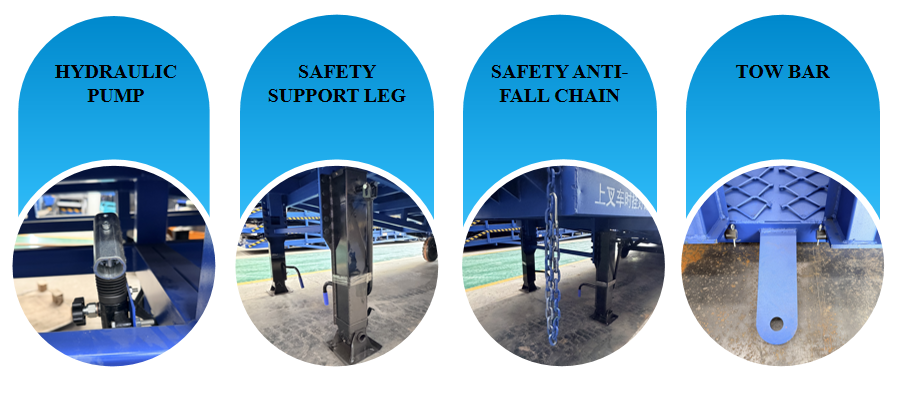
Portable loading ramps come standard with bottom towing slots and solid travel wheels, allowing forklifts to tow the unit across the plant to serve multiple container bays with one single ramp. Mobile loading docks feature an extended hydraulic lifting stroke with an adjustable height range of 1100mm to 1700mm, compatible with trucks and sea containers of varying chassis heights. All units are fitted with triple safety structures: load-bearing outriggers, container lock safety chains and side guardrails to eliminate slipping or tipping hazards that cause workplace injuries. The hydraulic system is equipped with waterproof, dust-proof power units suitable for high-temperature, high-humidity outdoor environments.
2.2 General Standard Technical Specifications
Mobile loading ramps are standardized at 6-ton, 10-ton and 15-ton load capacities, covering all loading demands from small warehouses to heavy machinery factories. Folded 3-fold portable loading ramps occupy far less space for sea container shipping. Mobile loading docks have standard deck widths matching mainstream 2-ton and 4-ton forklifts with no extra clearance required. All models feature stepless hydraulic lifting; operators can quickly adjust ramp height via a manual hydraulic handle without complex external electrical control systems, lowering maintenance difficulty for overseas plants.
3. Full-Sector Application Scenarios of Mobile Loading Ramps (Answers the Core Question: What Is a Mobile Loading Ramp Used For?)
3.1 Import & Export Manufacturing Plants: Efficient Full-Pallet Container Handling
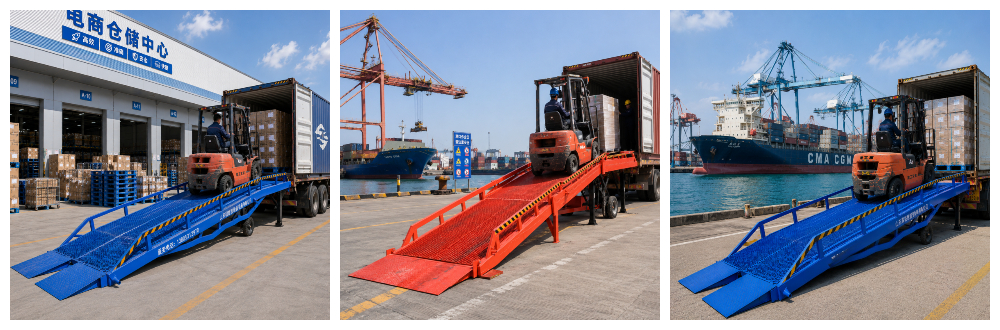
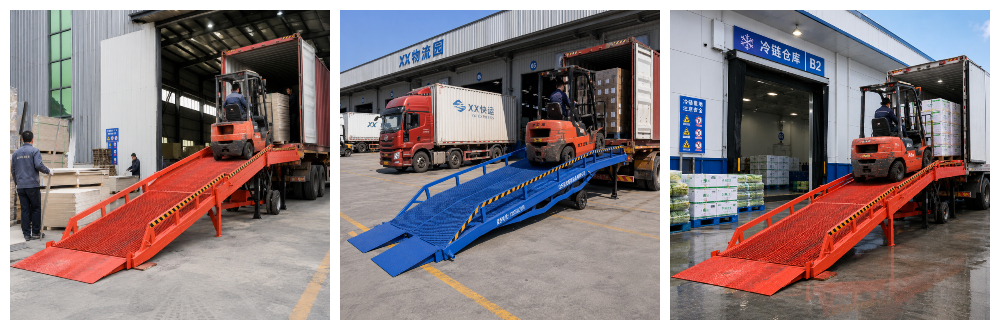
Export factories for auto parts, furniture, plastic products and food processing represent the largest application market for mobile loading ramps. For dock-free facilities fitted with portable loading ramps, forklifts can drive smoothly directly into 40ft containers for one-shot full-pallet transport. Full-container loading time is cut from 4–6 hours to under 2 hours, lifting daily container throughput by 2–3 times. Heavy machinery manufacturers select 12–15 ton mobile loading docks to carry fully loaded heavy forklifts transporting mechanical components, with repurchase rates consistently above 40% for Southeast Asian manufacturers.
3.2 Cross-Border E-Commerce & Port 3PL Yards
Temporary transit warehouses and LCL consolidation cloud warehouses near ports feature unfixed container parking bays. Mobile loading ramps can be towed to any bay, enabling one unit to serve multiple LCL containers simultaneously and resolving space shortages for synchronized multi-container loading. Clients operating open-air yards at coastal ports including Bangkok and Manila exclusively order hot-dip galvanized portable loading ramps to resist rain and salt spray corrosion, extending outdoor service life.
3.3 Agricultural Processing Plants, Temporary Construction & Exhibition Logistics
Fruit, vegetable and grain processing plants have scattered loading zones that fixed docks cannot fully cover. Lightweight 8-ton mobile loading docks feature simple operation that any regular worker can lift and reposition independently. The anti-slip deck prevents fresh produce pallets from sliding and breaking, reducing cargo damage. Construction sites and overseas exhibition material transit yards lack permanent loading infrastructure; mobile loading ramps can be relocated with project sites, delivering far higher cost performance than fixed dock renovations for short-term use.
4. Standard Manufacturing & Pre-Shipment Quality Inspection for Export-Grade Mobile Loading Ramps
Durability of high-quality mobile loading ramps relies on standardized production and multi-stage inspection procedures. Every portable loading ramp and mobile loading dock shipped overseas follows unified quality control standards to guarantee stable operation upon arrival after transoceanic transport.
CNC Precision Cutting: Q345 manganese steel and anti-slip grating are CNC-cut with dimensional tolerance controlled within 2mm to ensure assembly accuracy;
Robotic Full Penetration Welding: Automated welding of main beam frames reinforces structural strength to resist deformation under long-term heavy loads;
Custom Anti-Corrosion Treatment: Standard sandblasting + electrostatic powder coating for inland clients; full hot-dip galvanizing upgrade for tropical coastal orders;
Hydraulic System Assembly & Commissioning: Waterproof hydraulic power units are fitted and tested through thousands of lift cycles to eliminate oil leakage or jamming faults;
Complete Safety Accessory Assembly: Towing wheels, load-bearing outriggers, safety lock chains and side guardrails are fully installed;
Heavy-Duty Static Load Testing: Each mobile loading ramp undergoes 24-hour static testing at 1.25x rated load, passing inspection only with zero deformation or fluid leakage;
Supporting Document Packaging: CE safety certificates, material test reports and multi-language operation manuals are packed alongside each unit to meet global customs clearance requirements.
5. High-Frequency FAQs for Overseas B2B Buyers
Q1: What is the difference between mobile loading ramp, portable loading ramp and mobile loading dock?
They are segmented industry names for the same category of loading equipment with identical core functions.
Mobile loading ramp: Universal general term for all mobile loading ramps;
Portable loading ramp: Refers to lightweight, towable foldable portable models;
Mobile loading dock: Matches the performance of fixed docks, featuring longer hydraulic lifting strokes and higher heavy-duty load capacities.
All three keywords are interchangeable in foreign trade inquiries.
Q2: Can portable loading ramps operate on bare dirt or gravel ground?
Mobile loading ramps are not recommended for soft, unhardened dirt or gravel surfaces. Heavy forklift traffic will cause sinking and tilting, creating severe safety hazards. For soft ground, clients may lay steel plates for simple hardening, or select wide-base mobile loading docks to disperse weight and stabilize operation.
Q3: How to select the correct load capacity of mobile loading ramp for your warehouse?
Core selection formula: Ramp rated load capacity ≥ forklift dead weight + total weight of loaded goods.
A mainstream 4-ton forklift carrying standard goods only requires a 6-ton portable loading ramp. For long-term transport of heavy machinery pallets, add a 1–2 ton safety margin and prioritize 10-ton or 15-ton mobile loading docks.
Q4: What custom configurations fit high-humidity tropical coastal regions?
Three upgrade options are available for hot, rainy, high salt-spray areas:
Full hot-dip galvanized anti-corrosion finish instead of standard powder coating;
Waterproof and dust-proof protective covers for hydraulic power units;
Stainless steel safety lock chains.
These upgrades effectively prevent rust and hydraulic system malfunctions, greatly extending outdoor service life.
6. Conclusion & Purchase Call to Action (CTA)
Global market trends and cross-industry application cases fully answer the core question: What is a mobile loading ramp used for? Mobile loading ramps, portable loading ramps and mobile loading docks resolve three major industry pain points: low efficiency for dock-free warehouses, high civil construction costs and limited fixed loading positions. With zero civil construction requirements, full plant mobility, adjustable hydraulic height and fully compliant safety design, they are steadily replacing traditional fixed loading docks.
If you are a purchasing manager from overseas manufacturing plants, cross-border e-commerce warehouses or port yards seeking standardized mobile loading ramps matched to local container and forklift conditions, contact our team directly. We provide free customized site selection plans, full technical spec sheets and real-world project case references from overseas clients. We offer accurate quotations on both FOB shipping port and CIF destination port terms. Custom load capacities, deck widths and anti-corrosion treatments are supported, with complete CE customs clearance documents supplied. Product samples can be sent for on-site load testing to deliver a one-stop solution for all your warehouse container loading needs