Transfer Trolley For Sale
1.Exceptional Load-Bearing Capacity for Heavy-Duty Applications
Built with a heavy-duty steel frame, our electric rail carts support loads from 5 tons to over 200 tons, ensuring stable and reliable transport for heavy industrial materials.
2.Flexible Mobility & Maneuverability
Compatible with single, dual and curved rails, with tight turning radii and variable speed control for smooth, precise movement in complex layouts.
3.Enhanced Safety for Workplace Operations
Equipped with dual brakes, anti-collision sensors, limit switches and overload protection to minimize risks and meet industrial safety standards.
4.Cost-Effective & Low Maintenance
Electric-powered for lower energy costs and zero emissions. Durable construction requires only basic inspections and lubrication, reducing long-term expenses
Product Introduction
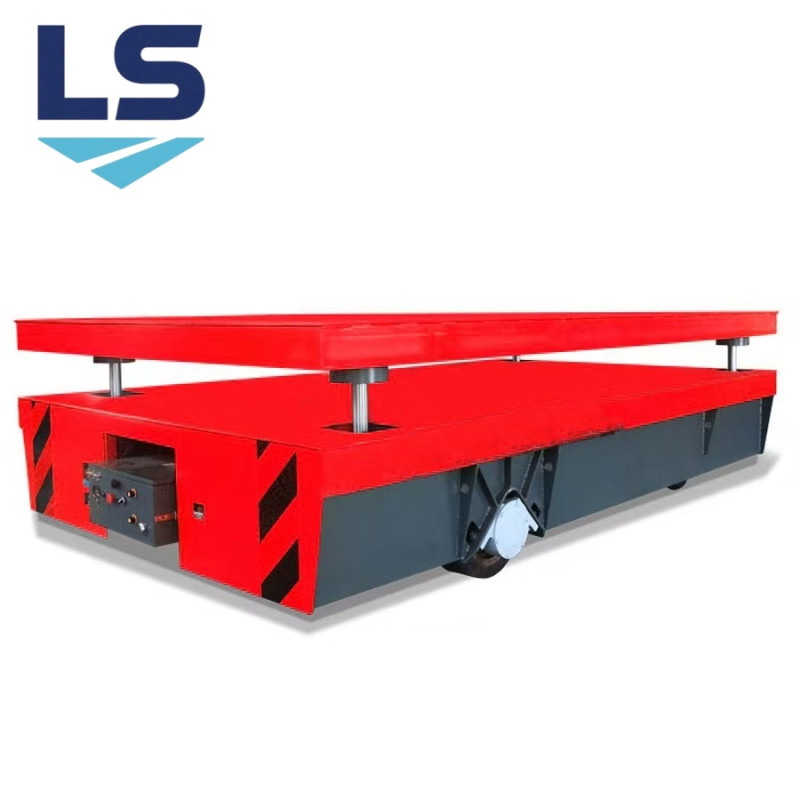
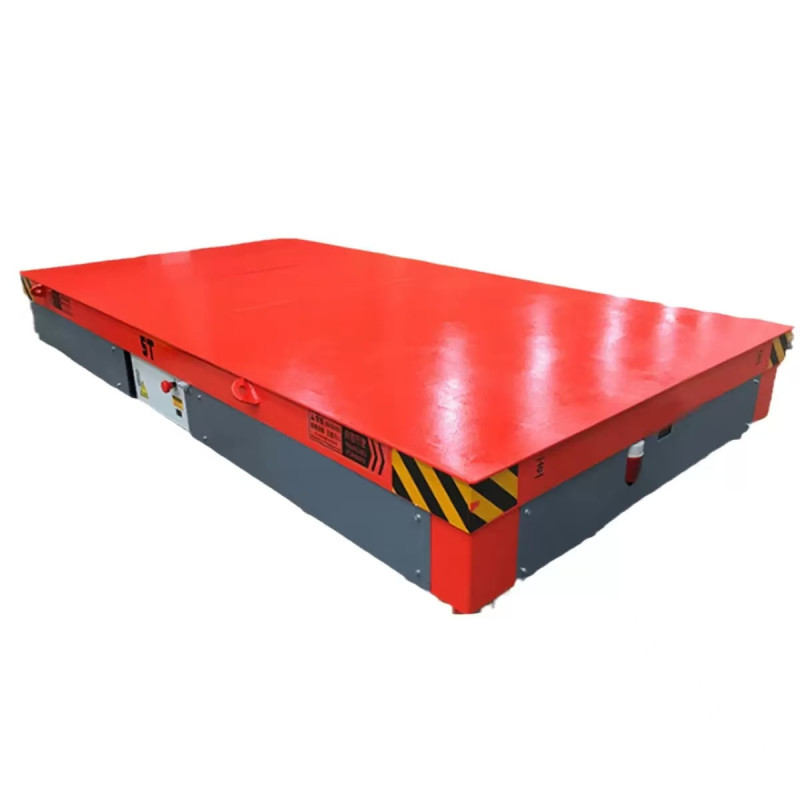
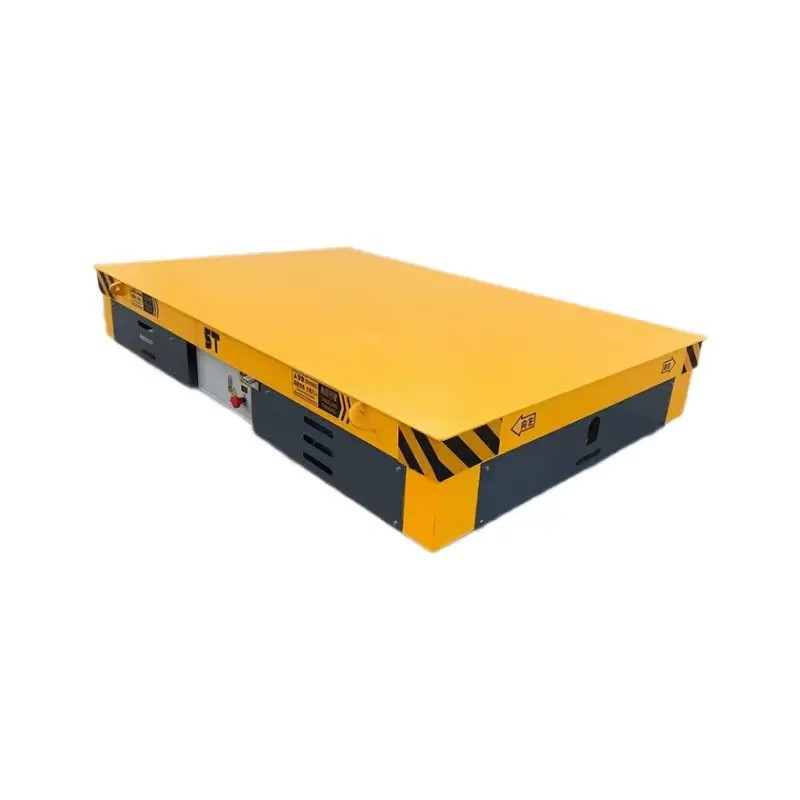
The electric track flat car is a heavy-duty rail-mounted electric transfer equipment specially designed for industrial workshops, warehousing and logistics, metallurgy and heavy industry, and other scenarios. Powered by electricity, it runs smoothly along fixed tracks and can efficiently carry heavy materials such as molds, steel, large equipment, and castings weighing from 5 tons to hundreds of tons, replacing traditional manual and inefficient handling methods. With advantages such as high load capacity, high safety, low energy consumption and easy maintenance, it supports customized design and automated integration, and is a core equipment for modern industrial material handling.
1.Outstanding heavy-load capacity: The high-strength steel welded frame has a wide load-bearing capacity and does not deform under long-term heavy loads, meeting the stable transportation requirements of various heavy materials.
2. Flexible and precise operation: Compatible with various types of tracks such as single-track, double-track, and curved tracks, with stepless speed regulation and precise positioning, it can easily adapt to complex workshop layouts.
3. Comprehensive safety protection: Dual braking systems, anti-collision sensors, limit devices, and overload protection provide multiple layers of protection to eliminate potential risks such as derailment and collision.
4. Economical, durable and easy to maintain: Electric drive has low energy consumption, no exhaust gas, reliable core components, and only requires basic inspection and lubrication on a daily basis, reducing usage costs.
5. Strong customization and adaptability: The size, countertop, and power supply method can be customized as needed to meet the requirements of different industries and special working conditions. Condensing the product introduction to 200 words and recommending some excellent product introduction samples for track flatcars. How to highlight the customization advantages of electric track flatcars in the product introduction?

Product Classification
1.Classified by power supply mode:Battery-powered type .Low-voltage track power supply type cable drum power supply type sliding contact line power supply type
2. Classified by running track form: Double-track electric flat car (standard mainstream) .Single-track electric flat car (suitable for narrow Spaces). Curved track/turning type electric flat car (can run on curves) Trackless electric flat car (no tracks required)
3. Classification by structure and function: Standard flatbed electric flat car Lifting electric flat car (platform can be lifted) .Frame type/special platform electric flat car. Weighing electric flat car (with built-in weighing function)
4. Classification by special working conditions and industry: Explosion-proof electric flat car (chemical, flammable and explosive environments).High-temperature resistant electric flat car (metallurgical, foundry workshops).Anti-corrosion/waterproof electric flat car (humid, corrosive environments).Special electric flat car for clean rooms/dust-free workshops (precision manufacturing, electronics industry)
Working Principle
1.Power output: The motor is powered by the power supply system (battery, low-voltage track, etc.). After the motor changes speed and increases torque through the reducer, it drives the wheels to rotate, converting electrical energy into mechanical energy for the flat car to travel, providing power for transfer.
2. Track guidance: The wheels of the flat car precisely fit with the dedicated I-shaped track. The travel direction is restricted by the limit of the track to prevent deviation, ensuring that the flat car travels stably in a straight line or turns along the track, and achieving precise positioning.
3. Operation control: Operation instructions can be sent through remote control, line control or an automated system. After receiving them, the electrical control box adjusts the motor's speed and forward and reverse rotation to achieve the start, stop, speed regulation and reversing of the flat car. The intelligent model can be programmed to realize automatic round trip and fixed-point start and stop.
4. Braking protection: Under normal driving, it adopts electronically controlled soft braking. In case of emergency, the emergency braking device quickly cuts off the power and locks the wheels. Combined with the frictional resistance of the track, it enables the flat car to stop smoothly over a short distance, avoiding the displacement of goods and the collision of equipment.
FAQ
1.Question: How should battery-powered flat cars be stored if they are not used for a long time?
Answer: After fully charging, disconnect the main power supply. Recharge once a month. Store in a dry, well-ventilated, and normal temperature environment, avoiding direct sunlight or low temperatures.
2.Question: How often does the lubricating oil of a reducer need to be replaced?
Answer: Replace it after the first use for 3 months, and then every 6 to 12 months. The specific replacement should be adjusted according to the equipment manual and the operating frequency.
3.How to maintain the track surface of a flat car powered by low-voltage tracks?
Answer: Regularly clean the dust, oil stains and oxide layer on the track, and check whether the track joints are flat and the insulation layer is intact to prevent poor contact or leakage.
4.Question: Do the limit switches and anti-collision sensors of flatcars need to be tested regularly?
Answer: Yes. Test at least once a month to simulate the triggering of limit switches and anti-collision, confirm the effectiveness of the automatic shutdown function, and ensure the reliability of safety devices.
5.Question: When operating an electric track car, can personnel stand on the car?
Answer: Standing or riding is strictly prohibited. Personnel should operate outside the safe area to prevent injuries from falls or collisions during operation.