Scissor Lift: Key Advantages, Market Trends & Procurement Guide for Global B2B Buyers
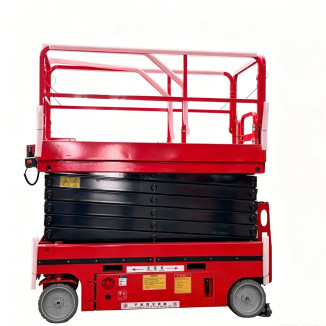
Scissor Lift | Mobile & Self-Propelled Scissor Lift Platform
Premium scissor lift, mobile scissor lift platform and self-propelled scissor lift solutions. Learn 2026 market trends, tech advantages & B2B procurement tips.
1. Current Status & Scale of the Global Scissor Lift Market
1.1 Overall Industry Development Background
The global construction and industrial aerial work industry has witnessed steady expansion in recent years, driving strong and sustained demand for professional scissor lift equipment. As essential mobile elevating work machinery, the scissor lift, mobile scissor lift platform and self-propelled scissor lift have become indispensable equipment for modern construction, industrial maintenance, logistics warehousing, municipal engineering and commercial facility renovation worldwide. With global infrastructure upgrading, rising standards for workplace operational safety, and the rapid development of intelligent construction, the scissor lift market has entered a stage of high-quality and stable growth.
1.2 Global Market Size and Growth Data
Relevant industry data shows that the global scissor lift market maintained a steady growth rate in 2025, with the overall market size exceeding USD 3.7 billion. Benefiting from the vigorous development of overseas emerging markets and the renewal cycle of old equipment in developed regions, the market is expected to achieve a compound annual growth rate of over 6% from 2026 to 2030. In terms of market demand structure, automated and high-flexibility aerial work equipment represented by self-propelled scissor lift occupies the mainstream market share, while the cost-effective mobile scissor lift platform maintains strong market vitality in the small and medium-sized engineering and facility management sectors.
1.3 Regional Market Demand Distribution
Regionally, developed markets such as North America and Europe have high requirements for equipment safety, intelligence and environmental protection, forming a high-end scissor lift consumption market. Meanwhile, the Asia-Pacific, Middle East, Africa and Latin American markets are booming. Large-scale infrastructure projects, factory expansion and urban renovation projects in these regions have greatly boosted the demand for durable, low-maintenance and cost-effective scissor lift products, bringing broad business opportunities for global B2B suppliers and procurement traders.
2. Core Technical Advantages of Modern Scissor Lift Equipment
2.1 Structural Stability and Load-Bearing Performance
Traditional aerial lifting equipment has long been plagued by inflexible movement, single performance and poor safety. With the iteration of mechanical manufacturing and hydraulic intelligent control technology, today’s mainstream scissor lift, mobile scissor lift platform and self-propelled scissor lift have achieved comprehensive upgrades in structural design, safety performance and operational flexibility, fully adapting to complex global engineering operation standards.
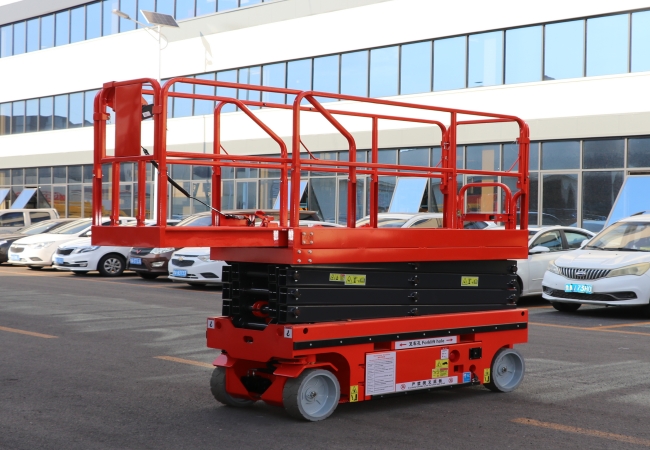
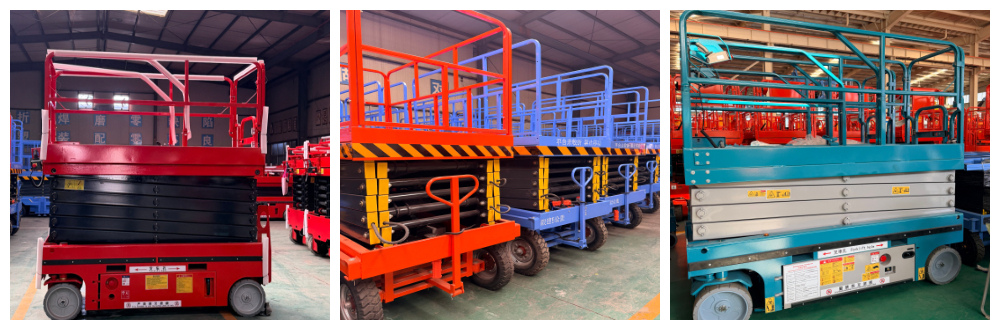
In terms of structural performance, all high-quality scissor lift products adopt high-strength manganese steel scissor arm structures, which feature strong compression resistance, good toughness and no deformation under long-term heavy load. Optimized hydraulic transmission systems ensure stable lifting speed, uniform bearing force and no jitter during operation, effectively improving the safety and stability of high-altitude operations. Compared with traditional fixed lifting equipment, both mobile scissor lift platform and self-propelled scissor lift break through the limitation of fixed use sites, realizing cross-region and cross-scene flexible operation.
2.2 Intelligent Control and Professional Safety Configuration
The upgraded self-propelled scissor lift integrates independent electric walking system, intelligent steering control, overload protection, anti-tilting alarm and emergency descent device. The whole operation process is fully electrified and intelligent, eliminating the need for manual traction and auxiliary operation. The mobile scissor lift platform retains the advantages of simple operation and low failure rate, and is equipped with universal walking wheels and stable braking and supporting structures, which can quickly adapt to flat ground, indoor floors and simple outdoor road conditions, meeting the lightweight and flexible operation needs of most B2B customers.
2.3 Energy-Saving and Environmental Protection Performance
In terms of environmental protection and energy saving, the new generation of electric scissor lift equipment completely abandons diesel drive, realizing zero exhaust emission, ultra-low noise and low energy consumption. This feature enables the scissor lift to work smoothly in indoor closed spaces, shopping malls, office buildings and urban core construction areas, fully complying with international environmental protection and urban construction management standards.
3. Main Application Scenarios of Scissor Lift in Global Industries
3.1 Construction Industry Core Applications
The diverse performance advantages of scissor lift, mobile scissor lift platform and self-propelled scissor lift enable them to cover almost all medium and low-altitude aerial work scenarios, becoming the preferred equipment for global industrial and construction enterprises. Different types of scissor lift equipment can perfectly match differentiated operational needs of various industries.
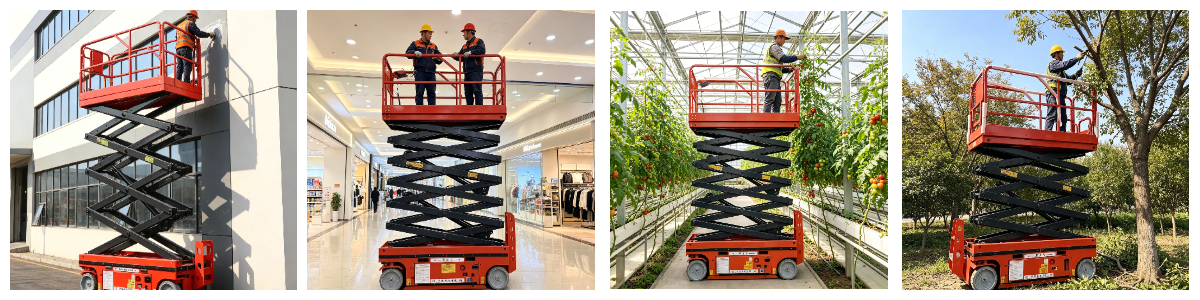
The construction industry is the largest downstream application market for scissor lift products. In building construction, exterior wall renovation, interior decoration and bridge maintenance projects, flexible mobile scissor lift platform can quickly adjust the operation position, efficiently complete high-altitude installation, debugging and cleaning work, and greatly improve construction efficiency compared with traditional scaffolding. For large-scale construction sites with frequent equipment migration and continuous high-intensity operation, the self-propelled scissor lift with automatic walking and intelligent control functions can effectively save labor costs and shorten the construction cycle.
3.2 Logistics and Intelligent Warehousing Scenarios
The logistics and warehousing industry is a fast-growing emerging application field. With the rapid expansion of global intelligent warehousing and e-commerce logistics systems, a large number of warehouse shelf installation, goods sorting, equipment maintenance and warehouse cleaning work require stable and flexible lifting equipment. The scissor lift can realize fixed-point cargo lifting and high-altitude operation, while the mobile scissor lift platform can flexibly shuttle in narrow warehouse passages, adapting to the compact space layout of modern intelligent warehouses.
3.3 Municipal Engineering and Commercial Facility Management
In municipal engineering and commercial facility management, scissor lift equipment also shows strong applicability. Urban street lamp maintenance, traffic facility debugging, park facility renovation, as well as daily maintenance and cleaning of shopping malls, hotels and exhibition halls, all rely on lightweight and low-noise mobile scissor lift platform and self-propelled scissor lift. The equipment features convenient deployment and no damage to the ground, which will not affect the normal operation of commercial venues and urban public facilities.
4. 2026 Global Scissor Lift Industry Development & Procurement Trends
4.1 Full Electrification and Low-Carbon Development Trend
Affected by global green development policies, intelligent manufacturing upgrading and increasingly strict international safety standards, the scissor lift industry is ushering in three major development trends in 2026, which are important references for global B2B buyers to carry out equipment procurement and asset renewal.
First, full electrification and low-carbon upgrading have become the rigid threshold for product export. More and more countries and regions have issued strict emission and noise control standards for construction equipment. Traditional fuel-powered lifting equipment is gradually restricted from entering urban construction and indoor operation scenarios. Electric scissor lift, mobile scissor lift platform and self-propelled scissor lift have become the mainstream procurement choices in overseas markets, and electrification level has become one of the core indicators to measure product competitiveness.
4.2 Intelligent Digitalization and Fleet Management Upgrading
Second, intelligent and digital management is accelerating popularization. High-end self-propelled scissor lift products are gradually equipped with IoT remote monitoring, real-time fault diagnosis, operation data statistics and fleet management functions. For large equipment rental companies and group engineering enterprises, intelligent equipment can realize predictive maintenance, reduce equipment failure rate and management cost, and improve the overall operational efficiency of the equipment fleet, which has become an important trend in medium and high-end market procurement.
4.3 Lightweight and Customized Product Demand Growth
Third, customized and lightweight products are more popular. With the diversification of application scenarios, standardized general equipment can no longer meet the differentiated needs of some special scenarios. Manufacturers continue to launch lightweight, narrow-body, ultra-high and heavy-duty customized scissor lift products. The optimized mobile scissor lift platform with compact structure can adapt to narrow spaces such as elevator shafts and high-rise interior corridors, while heavy-duty scissor lift meets the heavy-load operation needs of industrial factories, and customized products have become a new growth point of market demand.
5. Manufacturing Standards & Quality Control of Export-Grade Scissor Lift
5.1 International Export Certification Standards
Export-oriented scissor lift, mobile scissor lift platform and self-propelled scissor lift need to comply with unified international manufacturing standards and strict quality inspection processes to ensure stable performance, safe operation and smooth customs clearance in global markets. All export-grade products adopt standardized whole-process production and quality control, fully complying with CE, ISO9001, OSHA and other mainstream international certification standards, which are essential for entering European, American and global mainstream B2B markets.
5.2 Whole-Process Factory Quality Inspection Process
From raw material incoming inspection to finished product delivery, every link of scissor lift production implements strict quality control. High-strength steel materials are screened layer by layer to eliminate unqualified raw materials; robotic precision welding ensures structural firmness; hydraulic and electrical systems undergo repeated debugging and 72-hour continuous aging tests. Each batch of mobile scissor lift platform and self-propelled scissor lift will complete safety load testing, anti-tilting detection and lifting stability calibration before delivery, ensuring zero failure rate in overseas transportation and formal operation.