Mobile Container Ramp: Premium Mobile Loading Ramp Solutions for Global B2B Logistics
Mobile Container Ramp | Heavy-Duty Mobile Loading Ramp for Logistics
High-performance mobile container ramp & mobile loading ramp. Explore 2026 market trends, technical specs & B2B procurement guide for global cargo handling.
1. Global Industry Background & 2026 Market Statistics
1.1 Industry Development Context
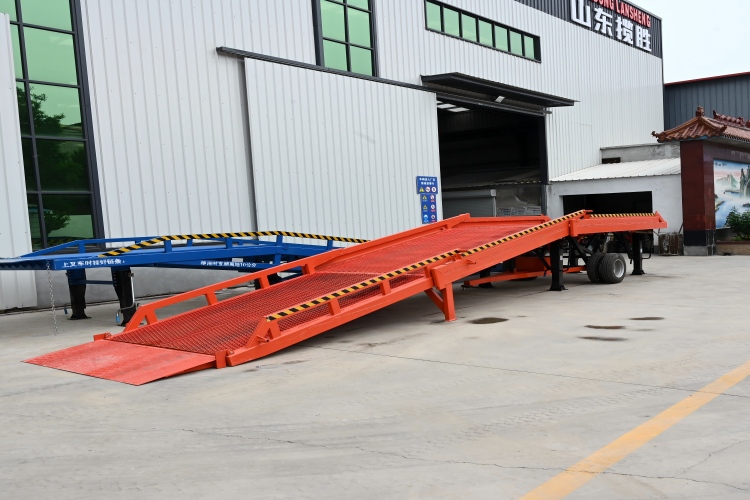
The global logistics industry is undergoing comprehensive flexible transformation, with mobile cargo handling infrastructure gradually replacing fixed docking facilities. A mobile container ramp and standard mobile loading ramp have become core essential equipment for modern freight yards, temporary container stations, third-party logistics warehouses and cross-border transit bases worldwide. Unlike traditional fixed dock levellers that require civil construction and fixed installation, the mobile loading ramp features full mobility and rapid deployment, allowing forklifts to directly access shipping containers without site transformation. This flexible advantage perfectly matches the asset-light operation mode of global logistics enterprises and rental-based logistics companies, driving continuous market expansion of mobile container ramp products.
With the explosive growth of cross-border e-commerce and frequent global container freight turnover, traditional fixed loading equipment can no longer adapt to multi-site, high-frequency and mobile operation demands. The versatile mobile container ramp solves the height difference problem between container floors, yard grounds and truck carriages, effectively improving container loading and unloading efficiency while reducing manual handling costs, becoming a rigid demand for global logistics infrastructure upgrading.
1.2 Authoritative Global Market Data & Growth Trend
According to 2026 global logistics equipment industry research reports, the global mobile loading ramp market maintains robust steady growth. The mobile container ramp segment reached a market value of USD 105.42 million in 2025, with a year-on-year growth rate of 8.25%. It is projected to reach USD 119.17 million in 2026 and exceed USD 183 million by 2032, ranking as one of the fastest-growing segmented tracks in industrial cargo handling equipment.
The overall mobile loading ramp market achieves a sustained CAGR of 6.8%, benefiting from global warehouse renovation, container terminal expansion and the booming logistics rental industry. Regionally, the Asia-Pacific region dominates global production and export volume with complete manufacturing chains and cost advantages. North America and Europe occupy the high-end consumer market with strict safety certification standards, while Southeast Asia, Latin America and Africa witness rapid demand growth due to continuous infrastructure construction and logistics equipment renewal.
1.3 Regional Procurement Demand Differences
Global B2B buyers present obvious differentiated demands for mobile container ramp and mobile loading ramp products. European and American buyers prioritize CE certification, ISO quality compliance, anti-fatigue structural performance and all-weather durability, focusing on long-term operational safety and standardized production. Emerging market buyers in Southeast Asia, the Middle East and Africa pay more attention to cost performance, uneven ground adaptability, waterproof and anti-corrosion performance, as well as low daily maintenance costs, requiring mobile loading ramp equipment to adapt to complex outdoor working conditions.
2. 2026 Core Industry Development Trends
2.1 Full Mobile & Hydraulic Intelligent Upgrading
Fixed docking equipment is gradually phased out of flexible logistics scenarios, and fully hydraulic mobile container ramp has become the mainstream procurement trend. The electric hydraulic adjustment system replaces manual operation, realizing one-key height adjustment and stable docking, greatly improving operational efficiency. Mobile loading ramp with autonomous hydraulic control systems can adapt to container height differences of 900mm to 1700mm, covering all standard international shipping container specifications.
2.2 High-Strength Lightweight Material Iteration
The industry is experiencing material upgrading iteration. High-strength low-alloy steel and thickened manganese steel gradually replace ordinary carbon steel as the core raw materials of mobile container ramp and mobile loading ramp. The new materials feature stronger impact resistance and anti-fatigue performance under frequent forklift dynamic load, effectively extending equipment service life and reducing long-term replacement costs for logistics enterprises.
2.3 Standardized Certification & Scenario Customization Coexist
On the one hand, international safety supervision standards are increasingly strict, making complete certification documents a necessary threshold for mobile loading ramp export. On the other hand, scenario-based customized demands continue to rise. Buyers in coastal salt-fog environments require enhanced anti-rust mobile container ramp, while narrow-yard working conditions need narrow-body customized mobile loading ramp, forming a coexisting market pattern of standard mass production and personalized customization.
Natural integrated long-tail keywords matching real buyer search demands: heavy-duty mobile container ramp for forklift operation, hydraulic adjustable mobile loading ramp for outdoor yards, CE certified mobile container ramp for cross-border logistics, anti-slip mobile loading ramp for rough terrain.
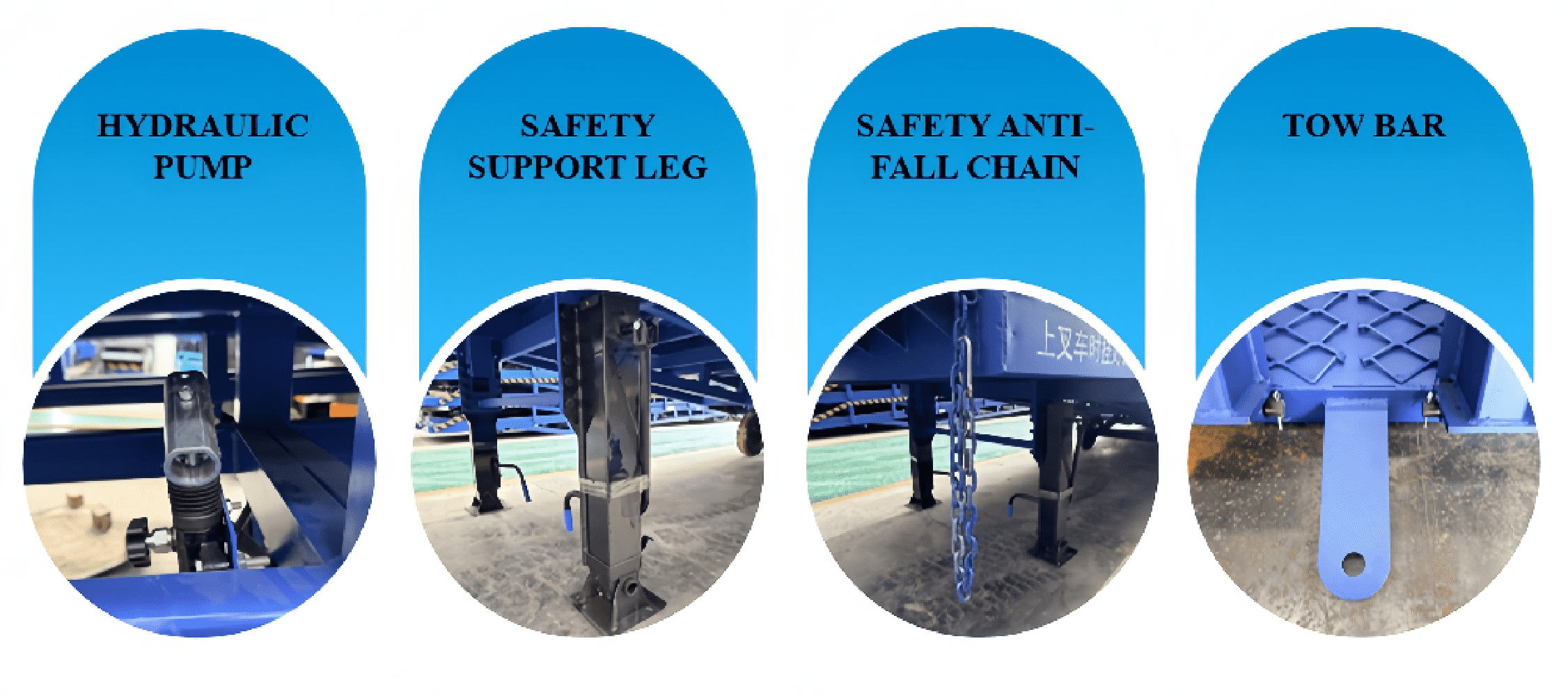
3. Product Structure, Technical Specs & Manufacturing Workflow
3.1 Core Structural Design Advantages
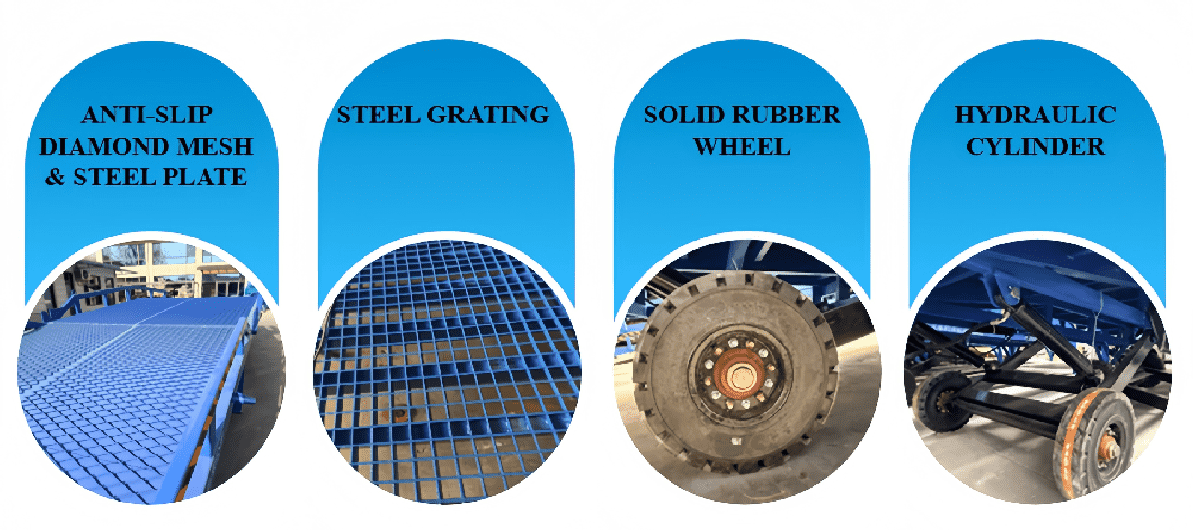
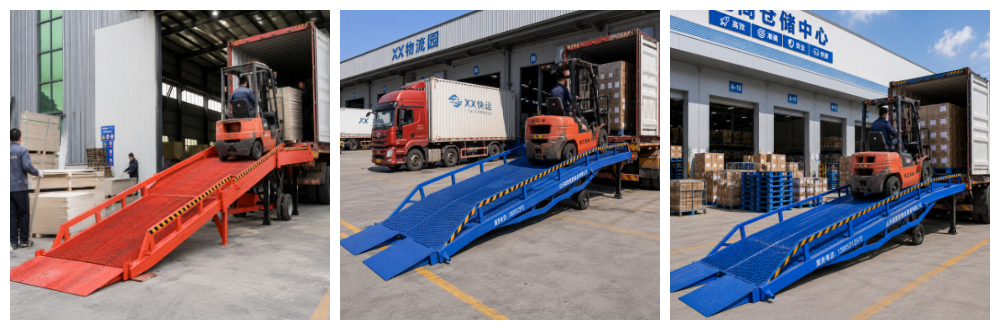
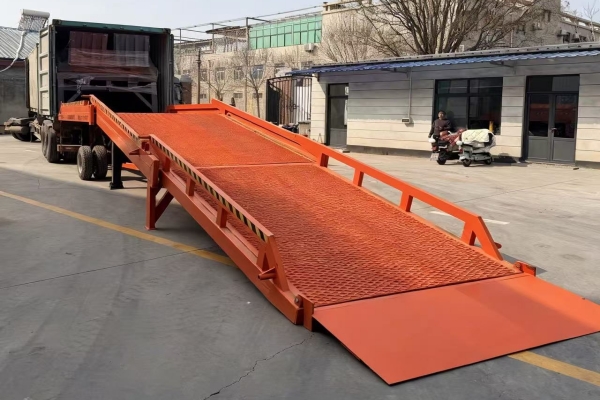
High-quality mobile container ramp and mobile loading ramp adopt integrated box-beam and I-beam welded structure, with overall stability and strong dynamic impact resistance. The whole machine consists of mobile walking wheels, load-bearing support legs, anti-slip grating deck, hydraulic lifting system and safety anti-displacement mechanism. The foldable and movable design realizes free site transfer without fixed installation or ground damage, perfectly adapting to flexible switching of multiple working sites.
The deck adopts serrated anti-slip grating technology, which drains rainwater and sundries in real time while maintaining high friction coefficient, effectively preventing forklift slipping in rainy, humid and dusty outdoor environments. The safety chain locking device fixes the mobile container ramp firmly with the container corner, avoiding displacement and tilting during full-load operation.
3.2 Mainstream Export Technical Parameters
Standard export-grade mobile loading ramp covers 6-ton to 15-ton heavy-duty load specifications, fully matching manual and electric forklift operation. The conventional dimension is 10–12m in length and 2100–2200mm in width, with an adjustable height range of 900–1700mm, compatible with all standard shipping containers and truck docking heights. Manufacturers support customized size, load capacity and anti-corrosion treatment according to buyer project scenarios.
3.3 Standard Manufacturing & On-Site Application Process
Formal export mobile container ramp implements standardized industrial manufacturing procedures: CNC precision cutting ensures component dimensional accuracy; robotic full penetration welding eliminates structural gaps; shot blasting rust removal and multi-layer anti-rust spraying enhance outdoor durability; hydraulic system pressure testing and 72-hour aging operation guarantee stable lifting performance; finished product static and dynamic load testing verifies safety before packaging and shipment.
On-site application is simple and efficient: push the mobile loading ramp to align with the container opening, lower the support legs for stable grounding, fasten safety chains for fixation, adjust hydraulic height to fit the container floor, and then forklifts can safely pass through the mobile container ramp to complete container loading and unloading operations. After work, retract the hydraulic height and lift support legs for free transfer and storage.
4. B2B Buyers’ Procurement Pain Points & Selection Guidelines
4.1 Common Cross-Border Procurement Pain Points
Most international buyers encounter typical problems when sourcing mobile container ramp and mobile loading ramp. Low-cost inferior products confuse static load with dynamic load parameters, leading to insufficient actual bearing capacity and hidden safety hazards. Some products adopt ordinary steel materials, which are prone to deformation and rust after long-term outdoor use. In addition, many small manufacturers lack complete export certifications, resulting in customs clearance delays, and fail to provide effective after-sales maintenance and spare parts supply.
4.2 Scientific Product Selection Principles
Buyers should prioritize dynamic load parameters matching the total weight of forklift plus cargo, instead of only referring to static load data. Select appropriate ramp length according to actual ground height difference to avoid excessive slope affecting driving safety. For long-term outdoor and coastal use, prioritize mobile container ramp with enhanced anti-corrosion and anti-rust treatment. Meanwhile, verify supplier’s complete certification system, factory test reports and overseas after-sales service capabilities to ensure long-term stable equipment operation.
5. Frequently Asked Questions for Global B2B Buyers
Q1: What is the core advantage of a mobile container ramp compared with fixed dock equipment?
A mobile container ramp features full mobility and zero construction requirements. Unlike fixed dock levellers, the mobile loading ramp needs no foundation installation, supports multi-site free switching, and is more suitable for temporary freight yards, rental logistics projects and scattered container operation points, greatly improving equipment utilization rate.
Q2: How to choose the correct tonnage for a mobile loading ramp?
Buyers must select tonnage based on dynamic load (forklift + full cargo weight), not static load. 6–8 ton models apply to light and medium cargo handling, while 10–15 ton heavy-duty mobile container ramp is recommended for heavy machinery and full-load container turnover to avoid structural deformation.
Q3: What documents are required for exporting mobile loading ramp?
Formal export products require CE safety certification, ISO9001 quality certification, factory load test reports and product operation manuals. Complete documents ensure smooth customs clearance and compliance with local workplace safety regulations in Europe, America and other regions.
Q4: Is customized service available for special working scenarios?
Professional manufacturers support full customization including special width, length, load capacity and environmental treatment. We can tailor exclusive mobile container ramp and mobile loading ramp solutions for narrow passages, high-temperature humid environments and super-heavy load scenarios.
6. Professional B2B Solution & Call to Action
As a professional export manufacturer focusing on mobile container ramp and mobile loading ramp, we adhere to high-standard industrial production and strict quality inspection, providing stable, durable and fully certified logistics handling equipment for global B2B buyers. All products adopt high-strength steel structures and upgraded hydraulic systems, featuring strong bearing capacity, excellent anti-slip safety performance and all-weather environmental adaptability.
We provide one-stop cross-border services including free technical documents, product sample support, personalized scheme design, bulk preferential quotations and global after-sales guarantee. Whether you need standard mobile loading ramp wholesale or customized mobile container ramp solutions for special scenarios, our professional foreign trade technical team can deliver accurate and reliable support.
Contact us today to obtain the latest 2026 product catalog, real-time wholesale quotation and exclusive cargo handling optimization solutions to reduce your logistics operating costs and improve overall operational efficiency.