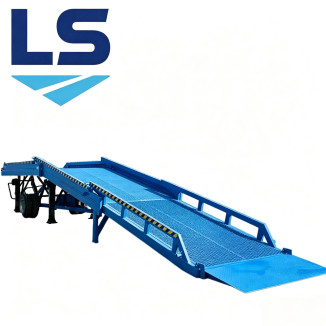
Container Loading Ramp: Professional Guide to Warehouse & Dock Loading Ramp for Global B2B Buyers
Container & Warehouse Loading Ramp | Dock Loading Ramp Solution
Premium container loading ramp, warehouse loading ramp and dock loading ramp. Explore 2026 market trends, specs & reliable B2B procurement solutions.
1. Global Loading Ramp Industry Context & 2026 Market Data
1.1 Industry Development Background
Global supply chain modernization and intelligent warehouse renovation have become core driving forces for the rapid growth of the loading ramp industry. As cross-border container transportation, e-commerce warehousing distribution, and terminal dock cargo turnover continue to expand worldwide, traditional fixed docking equipment can no longer match flexible, high-efficiency logistics operation demands. The container loading ramp, warehouse loading ramp and dock loading ramp have evolved from simple auxiliary handling tools into indispensable core infrastructure for container depots, modern warehouses and commercial freight docks.
Unlike conventional handling equipment, standardized container loading ramp solutions solve the height difference and access obstacles between ground surfaces, warehouse platforms and shipping containers. The flexible deployable warehouse loading ramp adapts to frequent cargo entry and exit in intensive storage scenarios, while fixed-type dock loading ramp ensures stable and high-frequency docking at professional freight terminals. The three mainstream product types cover full-scenario logistics handling demands, forming the core product matrix of the global loading ramp market.
1.2 Authoritative Global Market Statistics
Latest 2026 industry research data verifies that the global integrated loading ramp market maintains steady upward growth, with the overall market scale reaching USD 3.09 billion in 2028 and projected to hit USD 3.70 billion by 2032 at a sustained CAGR of 5.0%–5.2% . Among segmented tracks, the container loading ramp market presents stronger growth vitality, with a CAGR of 8.25% from 2026 to 2032, driven by surging global container freight volume .
From demand structure analysis, warehouse loading ramp products occupy the largest market share, benefiting from the global wave of warehouse infrastructure upgrading. Over 56% of overseas logistics facilities are renovating legacy dock and loading equipment to improve operational efficiency . Dock loading ramp products dominate professional port and terminal scenarios, maintaining stable rigid demand. Regionally, Europe and North America focus on high-standard safety-compliant products, while Asia-Pacific, Middle East and Latin America prioritize cost-effective, high-adaptability loading ramp equipment, creating differentiated procurement demands for global B2B buyers.
1.3 Regional Market Demand Characteristics
European and American markets enforce strict workplace safety and equipment certification standards, requiring container loading ramp, warehouse loading ramp and dock loading ramp to pass CE, ISO9001 and OSHA compliance inspections, with strict indicators for load stability, anti-slip performance and structural safety. The Southeast Asian and Middle Eastern markets emphasize high temperature resistance, corrosion resistance and low maintenance costs, adapting to harsh outdoor operation environments. As global logistics scenarios become more diversified, customized loading ramp solutions tailored to regional environments have become a key procurement trend for international buyers.
2. Product Structure, Technical Specs & Manufacturing Process
2.1 Core Product Classification & Scenario Matching
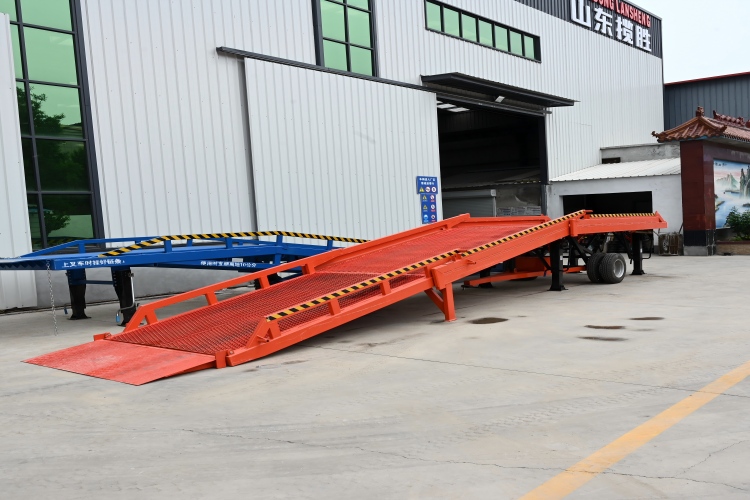
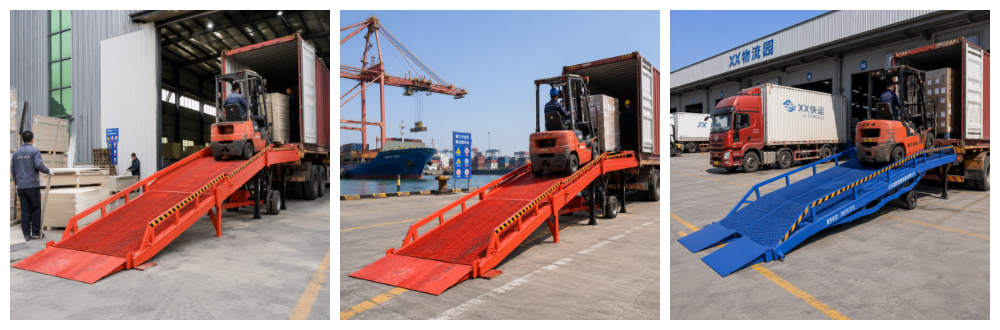
Three mainstream export-grade loading ramp products cover all global logistics handling scenarios with targeted functional positioning. The container loading ramp is specially designed for container truck docking and container cargo loading and unloading, featuring large adjustable height range and strong terrain adaptability, suitable for container yards, temporary freight sites and non-standard outdoor docking scenarios. The warehouse loading ramp adopts compact and stable structural design, adapting to narrow warehouse passages and high-frequency indoor cargo turnover, effectively improving warehouse space utilization and handling efficiency.
The dock loading ramp is fixed at fixed logistics docks and port terminals, with enhanced structural rigidity and super load-bearing capacity, supporting long-term uninterrupted forklift operation and large-batch cargo turnover. Conventional export specifications cover 6-ton to 12-ton load capacity, matching manual forklifts, electric forklifts and intelligent handling equipment, fully meeting the operational needs of small warehouses, large distribution centers and professional container terminals.
2.2 Standard Technical Configuration & Structural Advantages
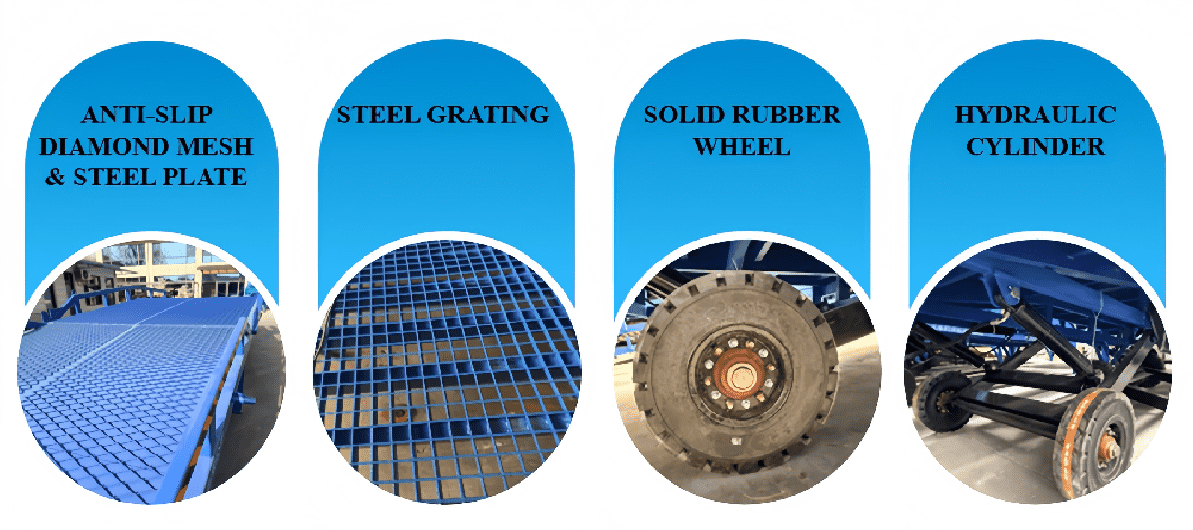
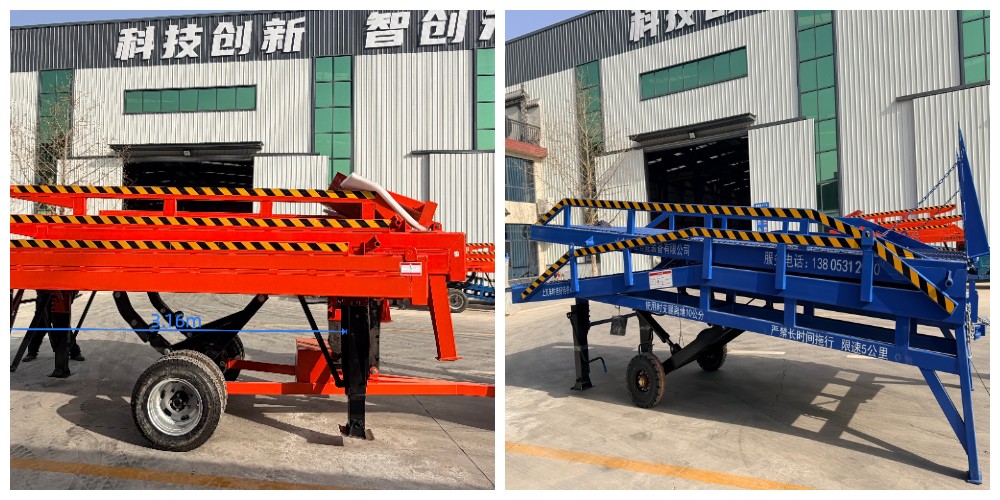
High-quality container loading ramp, warehouse loading ramp and dock loading ramp all adopt high-strength manganese steel integral frame structure, with strong compression resistance, impact resistance and structural stability, avoiding deformation and fracture under long-term heavy load. The surface adopts thickened anti-slip grid plate technology, which effectively prevents forklift skidding and cargo slipping, greatly improving operation safety.
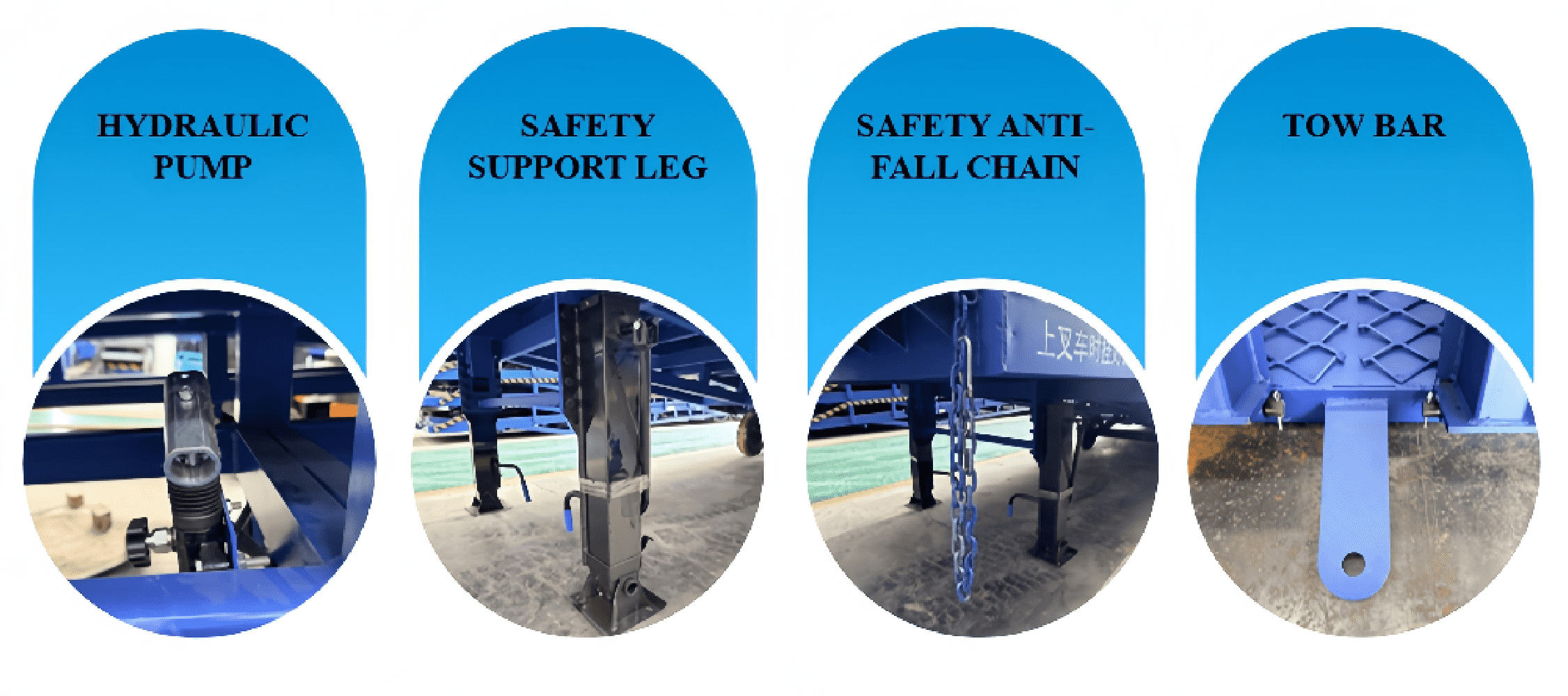
Standard hydraulic lifting systems support precise height adjustment, perfectly solving the height difference between container floors, truck carriages and warehouse platforms. Equipped with anti-collision rubber buffers, safety limit guardrails and emergency locking devices, all products meet international safety operation standards. Warehouse loading ramp focuses on lightweight and flexible movement, while dock loading ramp strengthens fixed stability and load limit, and container loading ramp optimizes outdoor terrain adaptation and anti-corrosion performance, realizing differentiated performance iteration for different scenarios.
2.3 Standardized Manufacturing & Application Workflow
All export loading ramp products adopt standardized whole-process manufacturing procedures to ensure consistent product quality. The production process includes high-quality steel raw material screening, CNC precision cutting, robotic full-penetration welding, hydraulic system assembly and debugging, multi-layer anti-rust electrostatic spraying, and finished product safety calibration. Key welding parts undergo secondary flaw detection to eliminate structural hidden dangers, and hydraulic components adopt international standard accessories to avoid oil leakage and failure.
In actual application scenarios, the operation workflow is efficient and convenient. For mobile container loading ramp and warehouse loading ramp, operators can complete positioning, leveling and height adjustment within 5 minutes to realize rapid cargo docking. Fixed dock loading ramp realizes one-key height adjustment, supporting continuous and efficient handling operations, effectively reducing cargo turnover time and improving overall logistics efficiency by nearly 38% compared with traditional manual handling modes .
3. 2026 Industry Trends & International Buyer Procurement Analysis
3.1 Intelligent & Scenario-Specific Customization Trend
With the popularization of intelligent warehousing and smart ports, the loading ramp industry is ushering in intelligent upgrading. More high-end container loading ramp and dock loading ramp products are equipped with IoT monitoring modules, which can monitor load status, equipment tilt and hydraulic pressure data in real time, realizing predictive maintenance. Meanwhile, scenario-based customized products are increasingly popular, including narrow-body warehouse loading ramp for compact storage spaces, anti-corrosion container loading ramp for coastal humid environments, and super-heavy dock loading ramp for heavy industrial cargo.
3.2 Green Environmental Protection & Safety Compliance Upgrading
Global environmental protection policies and workplace safety regulations continue to be upgraded, promoting the full green iteration of loading ramp products. New-generation container loading ramp, warehouse loading ramp and dock loading ramp adopt low-carbon environmental protection spraying materials and energy-saving hydraulic systems, achieving zero pollution and low energy consumption. Complete international certification has become a necessary threshold for export products, and non-standard low-quality equipment is gradually phased out of mainstream European, American and Oceanian markets.
3.3 International Buyers’ Procurement Preferences & Core Pain Points
Based on global B2B procurement big data, international buyers’ core preferences focus on three dimensions: stable structural performance, complete export certification and low later maintenance cost. Buyers prioritize loading ramp products with verified load capacity, excellent anti-slip safety performance and long service life to avoid operational risks and asset loss.
Common procurement pain points for overseas buyers include unstable load-bearing of low-cost loading ramp, easy rust and damage in outdoor environments, incomplete certification documents leading to customs clearance delays, and lack of professional technical guidance and after-sales service. Many buyers also face difficulties in model selection, unable to match the most suitable container loading ramp, warehouse loading ramp or dock loading ramp according to their actual operation scenarios, resulting in low equipment utilization.
4. B2B Professional FAQ for Global Loading Ramp Procurement
Q1: What are the key differences between container loading ramp, warehouse loading ramp and dock loading ramp?
A container loading ramp is mobile and terrain-adaptive, specially designed for container docking and outdoor temporary loading and unloading. A warehouse loading ramp features compact structure and flexible movement, suitable for indoor warehouse high-frequency cargo turnover. A dock loading ramp is fixed-type equipment with higher stability and load capacity, dedicated to long-term high-intensity operation at fixed docks and terminals. Buyers can select models according to operation site and frequency.
Q2: What certifications are required for exporting loading ramp products?
All formal export container loading ramp, warehouse loading ramp and dock loading ramp must pass ISO9001 quality system certification and CE safety certification to meet European and American market access standards. For high-temperature, humid and coastal markets, products need additional anti-corrosion process certification. Complete certification documents can ensure barrier-free customs clearance and local legal use.
Q3: How to select the correct load specification for different scenarios?
For conventional warehouse daily handling, 6–8 ton warehouse loading ramp is sufficient; for general container freight docking, 8–10 ton container loading ramp is recommended; for port dock heavy machinery and bulk cargo turnover, 10–12 ton reinforced dock loading ramp is the optimal choice. Professional supplier technical teams can provide one-on-one scenario-based model selection guidance.
Q4: What is the service life and daily maintenance routine?
High-standard manganese steel loading ramp products have a service life of 8–12 years under standard operating conditions. Daily maintenance is simple and low-cost: regularly check hydraulic oil level, clean surface dust and sundries, inspect welding joints and anti-collision parts, and avoid long-term overload operation. Standard products support long-term after-sales technical guidance and spare parts supply.
5. Professional B2B Procurement Call to Action
We are a professional export manufacturer focusing on the R&D, production and customization of container loading ramp, warehouse loading ramp and dock loading ramp. Adhering to strict international production standards, we provide full-series standard products and OEM/ODM customized solutions for global logistics enterprises, warehouse operators, port terminal companies and cross-border traders. All products have complete export certifications, stable performance and strong environmental adaptability, fully meeting the differentiated procurement needs of global regional markets.
We provide one-stop B2B supporting services including free technical parameter documents, product sample support, personalized scheme design, bulk preferential quotations and global after-sales guarantee. Whether you need small-batch trial orders or large-scale wholesale procurement, we can deliver high-cost-performance, high-quality loading ramp equipment.
Contact our professional foreign trade technical team today to obtain the latest 2026 product catalog, real-time wholesale quotation and exclusive scenario-based loading and unloading solutions to help you reduce operational costs and enhance market competitiveness.