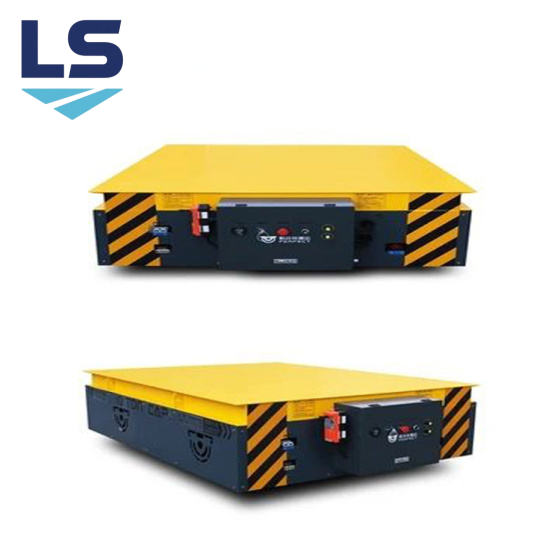
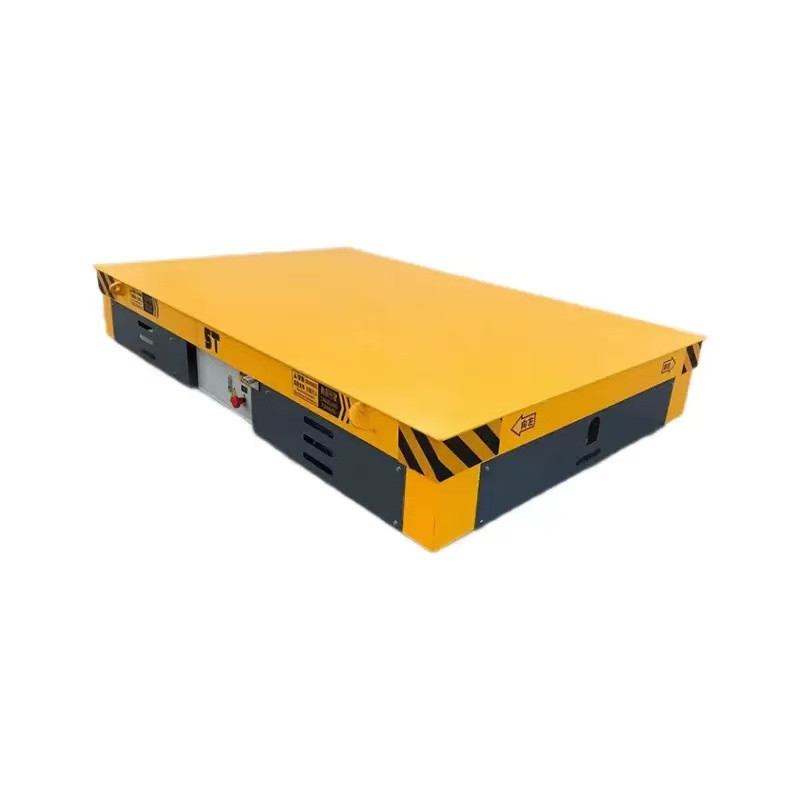
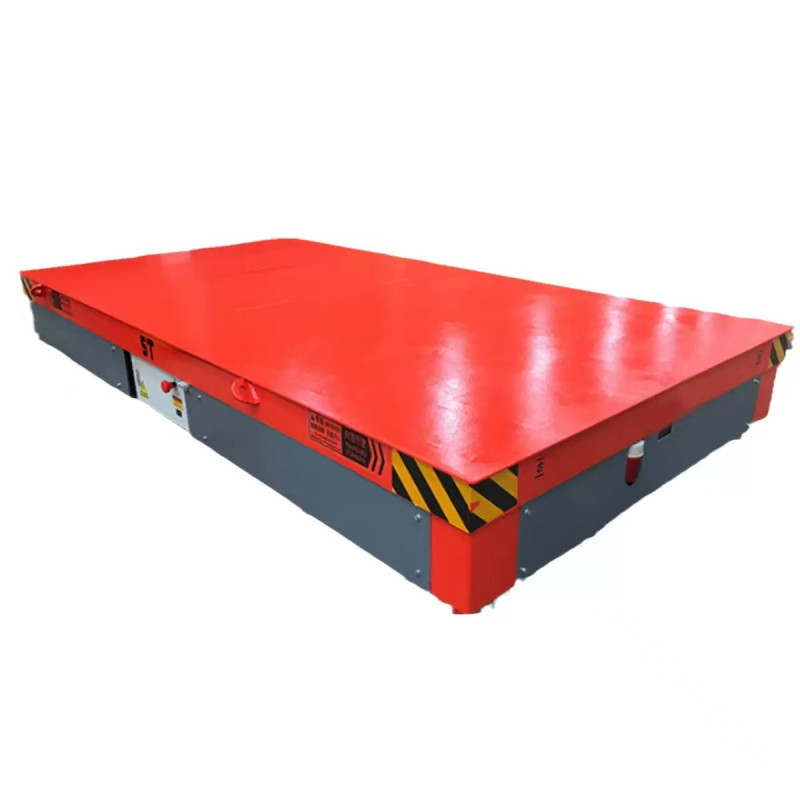
Good Transfer Trolley
1.High Load-Bearing Capacity & Sturdy Construction
High-strength thickened steel frame with optimized load distribution, excellent load-bearing capacity and sturdiness, anti-deformation and stable operation during heavy-duty transportation.
2.Flexible Movement & Maneuverability
High-sensitivity precision steering with anti-slip wear-resistant wheels, compact body for easy shuttling and turning in narrow industrial spaces, strong on-site maneuverability.
3.Diverse Power Options for Versatile Use
Optional electric and fuel power configurations; electric for low-noise, energy-saving indoor operation, fuel for high-power, long-endurance outdoor heavy-duty work, adapting to diverse scenarios.
Product Introduction
This industrial transfer vehicle is a highly efficient material handling equipment specially designed for various industrial scenarios. Based on a high-load-bearing and sturdy structure, it is equipped with a flexible steering system and multiple power options. It integrates the core advantages of intelligent control, all-round safety protection, and low maintenance and easy upkeep. The body design meets the operation requirements of workshops, warehouses, construction sites and other places. It can smoothly complete the short-distance transfer of light and heavy materials and industrial workpieces, adapt to various indoor and outdoor working environments, operate stably and conveniently, effectively improve the material circulation efficiency of enterprises and reduce production and operation costs.
1.High load-bearing capacity, solid, stable transportation and durable: Made of high-strength thickened steel structure, it optimizes the load distribution, ensuring no deformation during heavy transportation and no shaking during driving Flexible steering, all-domain adaptability: Highly sensitive and precise steering, compact body can easily navigate narrow roads and corners, strong adaptability to various venues.
3. Diverse power options, choose as needed: Electric/fuel dual power options available, low noise and energy saving indoors, strong outdoor endurance, suitable for different scenarios.
4. Intelligent safety control, worry-free operation: Humanized intelligent control, simple and easy-to-use interface, integrated with multiple safety protections, making work more reassuring.
5 Low consumption and easy maintenance, long-lasting durability: The modular design combined with wear-resistant core components requires only simple daily maintenance, ensuring a long service life of the equipment

Product Classification
1.Battery-powered type: Equipped with a built-in battery pack, no need for external cables, simple track laying, suitable for short-distance and frequent start-stop workshop transfer.
2.Low-voltage track-powered type: It takes power from the track (such as 36V safe low voltage), and its battery life is not limited by the battery. It is suitable for long-distance and continuous operation.
3.Cable drum power supply type: It is powered by the winding and unwinding of cables through cable drums. It has a simple structure and low cost, and is suitable for fixed routes and medium and short-distance transportation.
Working Principle
1.Battery-powered type: The flat car is equipped with a lead-acid/lithium battery pack. The battery stores direct current energy, which is charged and stored through a charger. During operation, the battery directly supplies power to the drive system and control system without the need for an external power source. It is an independent energy supply and is suitable for scenarios without track power supply and frequent short-distance transportation.
2. Low-voltage rail power supply type:The ground-laid tracks have both the functions of "walking guidance" and "conduction". Through the track transformer, 380V industrial electricity is stepped down to 36V safe low-voltage direct current. The flat car wheels come into contact with the tracks to obtain power. The electrical energy is rectified and stabilized on the vehicle and then supplied to the system. It belongs to an external continuous energy supply and is suitable for long-distance and continuous operation scenarios. 3. Cable drum power supply type: The flatcar is equipped with a cable drum (spring type/electric type), with one end connected to the fixed power supply in the workshop and the other end automatically retracting and extending the cable as the flatcar moves. Alternating current is transmitted through the cable, and after being converted by the on-board frequency converter, it drives the equipment. This is an external following energy supply type, suitable for scenarios with fixed routes and medium to short distances of transportation.
4. Sliding contact line power supply type: Sliding contact lines (conductive rails) are installed along the side of the track. The flat car acquires power by sliding contact with the sliding contact line through the collector (carbon brush). The power transmission is stable and suitable for high-speed, long-distance, and continuous operation scenarios.
FAQ
1.Question: What is the core function of the electric track flat car?
Answer: In scenarios such as factories, workshops, and warehouses, heavy-load transportation of materials like steel, molds, and large equipment along fixed tracks can replace manual handling, enhancing efficiency and reducing labor intensity.
2.Question: What are the core differences between electric track flatcars and ordinary forklifts?
Answer: The electric track car runs along a fixed track, has a strong load-bearing capacity (up to hundreds of tons), and operates smoothly. Ordinary forklifts travel without tracks, are flexible but have a low load limit (mostly a few tons), making them suitable for handling light and loose goods.
3.Question: What are the main power supply methods for electric track flatcars?
Answer: The mainstream types include battery power supply, low-voltage track power supply, cable drum power supply, and sliding contact line power supply, which are respectively suitable for different working distances and site conditions
4.Question: What could be the possible reasons for the flatcar not starting after being powered on?
Answer: ① The battery is discharged or has poor contact; ② The emergency stop button has not been reset. ③ Open circuit of the track power supply line/poor contact of the sliding contact line; ④ Failure of the drive motor or controller
5.Question: How to solve the problem of severe abnormal noise and shaking when the flatbed car is in motion?
Answer: ① If the wheel bearings are worn out or the track is deformed, the bearings need to be replaced and the track corrected. ② If the reducer is short of oil or the gears are damaged, add lubricating oil or replace the gears. ③ The weight distribution of the vehicle body is uneven. Adjust the placement of the goods.