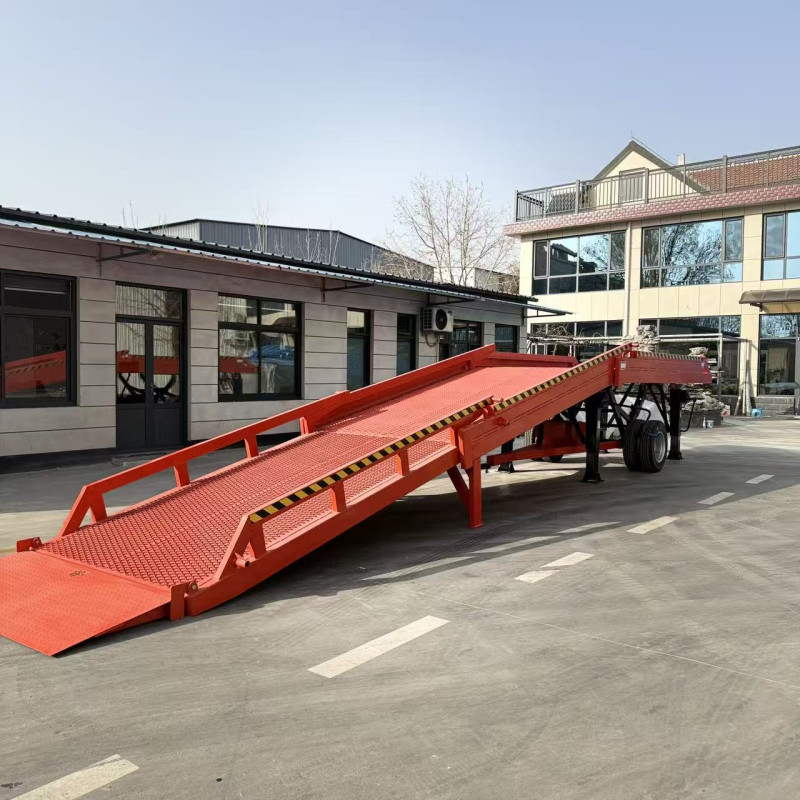
High Mobile Yard Ramp Quality
1. Strong Heavy-load Capacity & Durable Structure
High-strength thickened steel structure, sturdy and wear-resistant, with stable bearing capacity for long-term heavy-duty work.
2. Excellent Environmental Adaptability & Suitable for Outdoor Complex Working Conditions
Anti-corrosion and anti-slip design, adaptable to rainy, muddy and other outdoor complex working conditions, stable operation in various environments.
3. Flexible Mobility & Easy Deployment, High Operation Efficiency
Equipped with universal wheels and traction rod for quick transfer; simple deployment steps, immediate use after positioning, greatly improving loading and unloading efficiency.
4. Low Operation and Maintenance Cost & High Customization Degree
Simplified structure for easy daily maintenance with low cost; customizable for different load, space and working condition demands.
Product Introduction
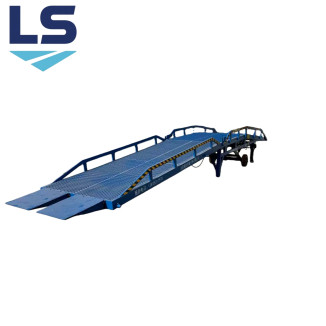
The High Mobile Yard Ramp Quality is a highly adaptable compact loading and unloading device. It adopts a three-fold structure of a main bridge and a double-section auxiliary bridge. After folding, its volume is reduced to one-third of the original length. It is driven by manual or electric hydraulic power, featuring an ultra-small storage ratio and flexible mobility. It does not require a fixed platform and can start working immediately when unfolded. It is specially designed for extremely narrow Spaces such as warehouse alleys, rear doors of supermarkets, and temporary delivery areas in communities. Easily solve the problem of height difference during loading and unloading in small sites.
1.The three-fold compact structure saves space when folded and is suitable for various narrow working scenarios.
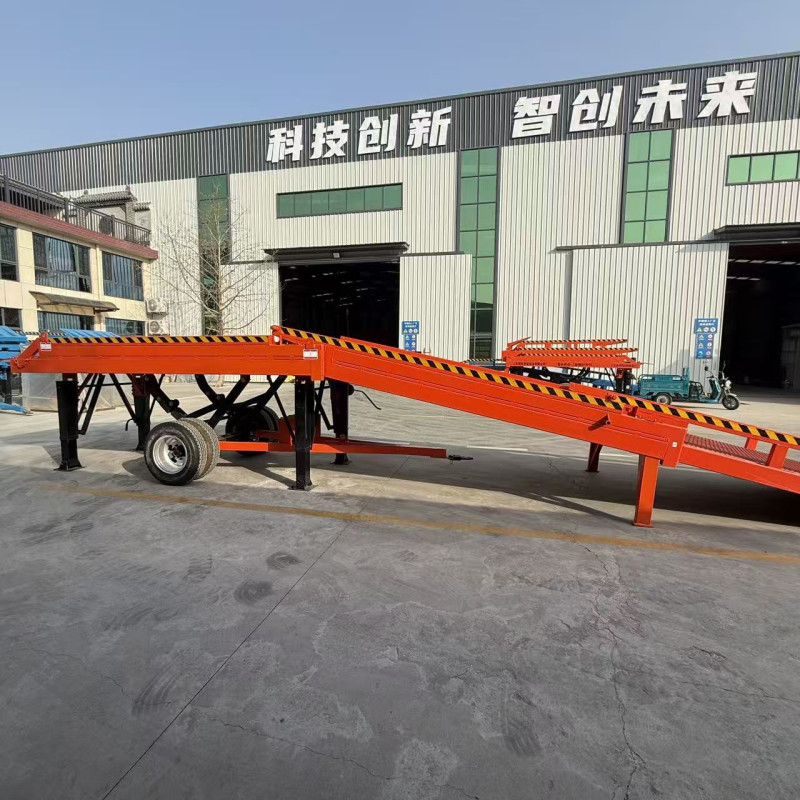
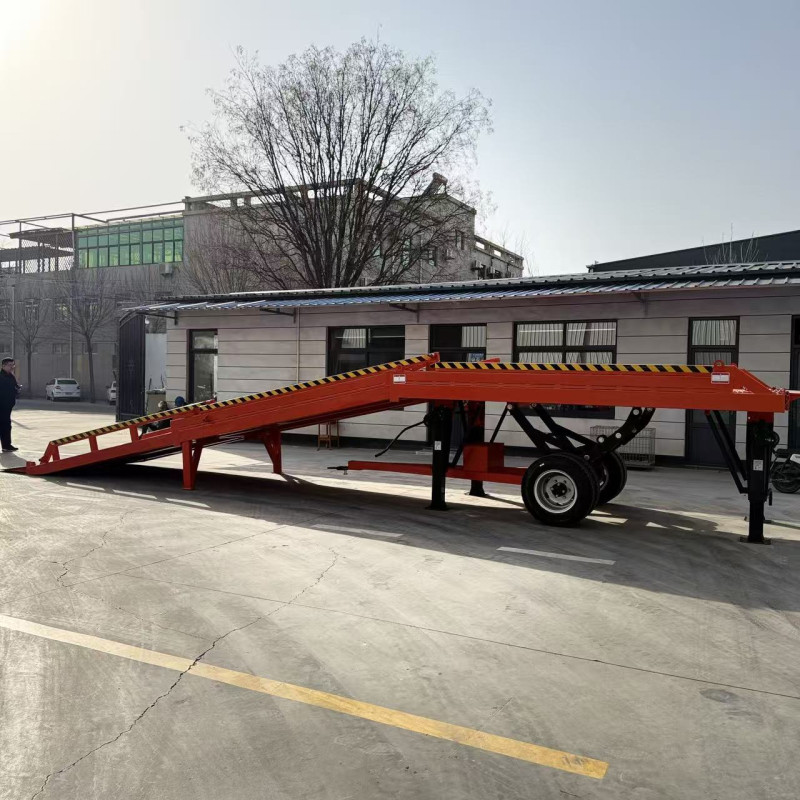
2. Lightweight design, equipped with a built-in traction wheel set, allowing for easy relocation by both manual and forklift operators.
3. Hydraulic lifting drive, simple operation, and the height can be flexibly adapted to different trucks.
4. Anti-slip panels throughout the bridge and multiple safety locks ensure stable and safe operation.
5. No infrastructure requirements. It can be used immediately upon deployment and responds quickly to temporary loading and unloading.

Product Parameters
External dimensions | Expansion dimensions: 11550mm (length) x 2200mm (width) x 1500mm (height) Folding up dimensions: 4500mm (length) x 2260mm (width) x 2330mm (height) |
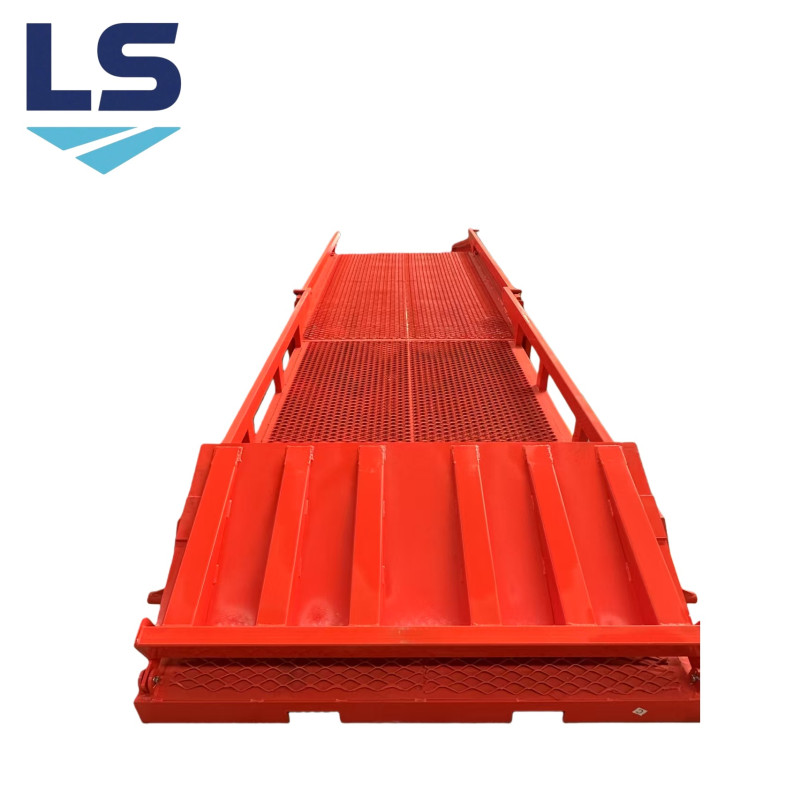
Platform size | Slope length (mm): 7200 ,Tail board (mm): 86mm, Front tongue plate(mm): 400mm, Equipment interior width: 2100mm, covered with 4mm steel plate and 6mm steel plate mesh |
Rated load capacity | 10000KG |
Equipped with power | Manual hydraulic pump, 4 hand cranked legs |
Adjustment range | 1100-1800mm (equipment adjustment range) |
Guardrail height | 300mm (40 x 80 x 3mm rectangular tube) |
Main structure | 160 x 80 x 4 rectangular tube 120 x 60 x 4 rectangular tube 5 main beams (with a spacing of about 40cm between the cross braces) |
Secondary beam structure | 100 x 50 x 4mm rectangular tube |
Hydraulic cylinder | Φ 80 x Φ 45 (2 pieces) |
Hydraulic tubing | 32Mpa high-pressure oil pipe |
Mobile rubber wheels | 650-9 solid tire |
Bridge and Container | The bridge body is welded with hooks and fixed with steel chains |
Paint surface | Red (Qilu Acrylic Resin Paint) Spray Painting |
Product Classification
Classified by power drive mode
1.Manual hydraulic model: Driven by a hand-cranked pump for lifting, no external power supply required, manually operable, suitable for temporary loading and unloading scenarios without power supply.
2. Electric-hydraulic model: The motor drives the hydraulic system, allowing for one-button lifting and lowering, which is more efficient and suitable for high-frequency operations with power supply.
Working Principle
1.Unlock the storage lock, pull out the safety pin, and release the locking state of the three-section folding of the bridge body.
2. Pull the two auxiliary bridge tie rods in sequence, flip them to be level with the main bridge, and tighten the pins to achieve seamless connection.
3. Lower the adjustable support legs, tighten the support feet and keep them close to the ground to ensure the stability of the bridge operation.
4. Hydraulically driven for lifting, the manual version uses a pump to increase pressure and lift the bridge, and opens the unloading valve to lower the bridge. The electric version can adjust the height with one button and precisely connect to the truck body.
5. After the operation is completed, lift the bridge and retract the legs. Unlock the secondary bridge in sequence, fold it to fit the main bridge, and fasten the lock to move and store it.
Product Application
1.For fixed small loading and unloading points with limited space such as narrow alleys in warehouses and the back doors of supermarkets and convenience stores, the three-fold compact structure can be unfolded for immediate operation. After folding, it can be attached to the wall for storage, completely not occupying the limited operation and storage areas.
2. Temporary distribution points for community group buying and small retail stores can be quickly deployed without fixed platforms. They can be displayed as needed and collected immediately after use, effectively solving the problem of height differences during loading and unloading of small and scattered goods.
3. Small logistics transfer warehouses and regional distribution points, lightweight and easy to tow and transfer, can be adapted to delivery trucks of different tonnages, meeting the frequent and multi-vehicle type of scattered goods turnover and loading and unloading needs.
4. Temporary material stations for construction sites and decoration sites can be put into use immediately upon arrival without the need for infrastructure construction. They can be easily connected with engineering vehicles and trucks to facilitate the convenient loading and unloading of building materials and small hardware items.
5. Short-distance delivery points for fresh fruits, vegetables and daily necessities are suitable for various temporary loading and unloading scenarios outdoors. They are flexible to move and easy to operate, effectively improving the loading and unloading efficiency of short-distance delivery and reducing the time consumed for goods transfer.
Company Strengths
 |
|
FAQ
1.Question: The three-fold section suddenly gets stuck halfway through its unfolding, and the hydraulic system shows no response. Even after restarting, it cannot continue to unfold or close. How should this be handled?
Response: First, inspect the travel limit switches of each folding section of the equipment. It is highly likely that the limit switches have been jammed by debris or the contacts have poor contact. Clean the soil around the limit switches, correct the offset switch contact pieces, and wipe the contacts with a dry cloth to ensure good contact. Check again whether the emergency stop button of the hydraulic system was accidentally touched. Reset the emergency stop and then operate again. If there is still no response, check whether the joints of the hydraulic circuit are loose. Tighten the joints and it can be restored.
2. Question: During operation, the middle folding section slightly sank. When the forklift reached this position, the bridge body shook more severely. What could be the reason for this?
Response: The core issue is the wear of the auxiliary support bushing in the middle folding section and the loosening of the connecting bolts of the support arm. First, stop the machine and lower it onto the platform surface. Then, tighten all the connecting bolts of the support arm and install anti-loosening gaskets. Replace the worn support bushing, apply grease to the new bushing, and at the same time check whether the load-bearing crossbeam in the middle section has any slight deformation. Slight deformation can be corrected by cold calibration, while severe deformation requires reinforcement and welding.
3. Question: When moving, the entire device veers off course. When pushed, one side is lighter than the other. When turning, it veers to one side. How can this issue be identified and resolved?
Response: First, check if the pressure of the moving tires on both sides is inconsistent. Replenish the tire pressure and keep it consistent on both sides. Check again for any jamming of the bearing on one side of the moving wheel or incomplete release of the brake. Clear the debris from the bearing, apply grease, and adjust the brake spring to ensure the brake is fully reset. At the same time, check whether the connection between the traction rod and the chassis is eccentric, correct the connection position of the traction rod, ensure that the force is centered, and avoid deviation during movement.
4.Question: When hydraulic lifting occurs, there is a distinct "hissing" abnormal sound, a large number of air bubbles are mixed in the oil, and the lifting efficiency drops significantly. How should it be handled?
Response: This is caused by air entering the hydraulic oil circuit. First, lower the tabletop to the lowest point, unscrew the exhaust valve at the top of the hydraulic oil tank, then slowly raise and lower the tabletop 2-3 times to expel all the air in the pipeline, and then close the exhaust valve. Check if the hydraulic oil level is too low, replenish the same type of anti-wear hydraulic oil to the standard liquid level, and at the same time check if air is entering each joint of the oil circuit. Tighten the joints and replace the damaged sealing rings to prevent air from entering again.
5.Question: After folding, the three-fold section does not fit tightly, with gaps and one side lifting. The equipment is unstable when placed and scratches the ground when moved. How can this be solved?
Response: First, check whether the positioning limit blocks of each folding section are worn or deformed. Replace the worn limit blocks, correct the deformed limit structure, and adjust the limit spacing of each section. Check again for inconsistent elasticity of the tension springs on both sides of the folding hinge, and replace them with springs that match the elasticity to ensure uniform force distribution on each section during folding. Finally, check whether the support foot pads at the bottom of the countertop are uneven in height. Adjust the height of the foot pads to ensure that the equipment fits smoothly and without lifting edges after retracting.