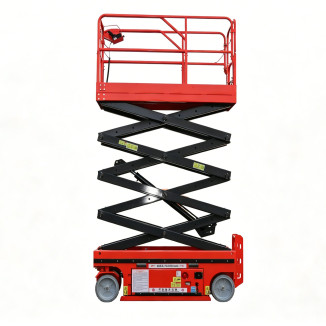
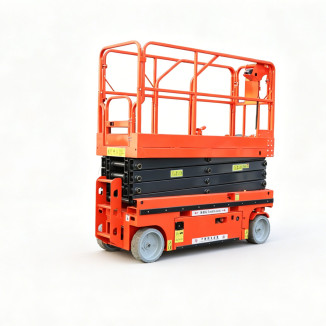
Advantages of Mobile Hydraulic Scissor Lift
Advantages of mobile hydraulic scissor lift | Electric Scissor Lift Buying Guide
Explore core advantages, market trends and technical features of scissor lift and hydraulic lift table, professional selection guide for B2B buyers in warehousing and construction.
1.Industry Background: Scissor Lifts Have Become a Must-Have for Modern Operations
As global warehousing logistics, infrastructure construction, factory operation and equipment maintenance industries continue to expand, businesses are facing growing frequency of aerial work and material lifting tasks. Traditional tools such as portable ladders, fixed lifting equipment and simple scaffolding can no longer keep up with modern operational standards. These outdated solutions feature low working efficiency, strict site limitations and prominent safety risks, restricting daily production and workflow optimization for enterprises.
Under this industry transformation, scissor lift, electric scissor lift and high-performance hydraulic lift table have gradually become the preferred equipment across various industries. These mobile hydraulic lifting devices integrate flexible mobility, stable operation and comprehensive safety performance, adapting to most working conditions and being widely purchased and applied by enterprises worldwide.
According to the latest industry research data, the global scissor lift market size reached 8.6 billion USD in 2024, and is expected to exceed 13.8 billion USD by 2032, with a steady CAGR of 6.3%. Benefiting from its electric hydraulic drive, energy-saving and eco-friendly performance and flexible movement, the electric scissor lift occupies over 62% of the global market share, ranking as the fastest-growing segment in the industry. For overseas B2B buyers, equipping workshops and warehouses with qualified scissor lift and hydraulic lift table can boost overall operational efficiency by more than 40%, significantly cut labor costs and reduce aerial accident risks, serving as one of the most practical and cost-effective solutions for enterprise cost reduction and efficiency improvement.

2.Core Competitive Advantages of Mobile Hydraulic Scissor Lift
2.1Full-scene Flexible Mobility for Versatile Applications
Different from fixed lifting equipment, the mobile electric scissor lift is equipped with solid rubber tires and a simple towing structure. It requires no civil construction or complicated installation and debugging, enabling convenient transportation and immediate operation after moving to the working area.
A professional scissor lift can quickly switch between various working scenarios, including warehouse cargo stacking, heavy equipment disassembly and assembly, building exterior wall maintenance, pipeline inspection and exhibition setup. It works smoothly in narrow indoor aisles and open outdoor yards, greatly improving equipment reuse rate. This outstanding site adaptability is one of the most core advantages of the mobile Hydraulic Lift Table, especially suitable for enterprises with multi-site and multi-point operation demands.

2.2 Electric Hydraulic Drive Ensures Stable Operation & Environmental Protection
Driven by the mature hydraulic transmission system of the hydraulic lift table and matched with an electric drive unit, the electric scissor lift achieves uniform and stable lifting without obvious platform shaking, providing reliable support for personnel aerial work and cargo lifting.
The fully electric working mode produces no exhaust emissions and runs with low noise, complying with increasingly stringent global environmental protection standards. It is perfectly applicable to high-standard enclosed spaces such as shopping malls, hospitals, indoor workshops and cold storage warehouses. Compared with traditional fuel-powered lifting equipment, the electric scissor lift features lower energy consumption and simpler daily maintenance, reducing long-term operation and maintenance costs by more than 30%.

2.3 Multiple Safety Protections for Higher Operational Security
Safety performance is the core focus of Scissor Lift R&D and manufacturing. Qualified factory-standard mobile hydraulic scissor lifts are equipped with complete safety devices: high-strength guardrails and anti-slip patterned platforms prevent slipping and falling risks; the whole machine is fitted with emergency stop buttons, power-off emergency lowering systems, anti-tilt alarms and overload protection modules.
In case of overload, body tilt, sudden power failure and other emergencies, the hydraulic and electrical systems of the hydraulic lift table will instantly activate protection mechanisms to lower the platform slowly and stop all operations. Meanwhile, the scissor structure adopts anti-pinch optimization to eliminate potential safety hazards in details, fully protecting the safety of operators and goods.
2.4 Heavy-load Stable Bearing & Durable Structural Design
Optimized by mechanical principles, the scissor mechanical structure boasts strong bearing capacity and excellent deformation resistance. Mainstream electric scissor lift models cover a load range of 300kg to 500kg and a lifting height of 6m to 16m, meeting diverse working demands including light-duty personnel operation and heavy-duty cargo lifting.
The equipment main body is welded with high-strength manganese steel profiles. All key welds undergo non-destructive testing, professional rust removal, anti-corrosion treatment and multi-layer spraying. With excellent wear and rust resistance, the lift can adapt to harsh long-term working environments, including outdoor sun and rain exposure and high-intensity indoor continuous operation, delivering long service life and outstanding comprehensive cost performance.
2.5 Simple Operation Reduces Labor & Training Costs
The mobile Scissor Lift adopts an integrated control handle with centralized control of lifting, moving and steering functions, featuring simple and clear operation logic. Operators can master skilled operation after short-term basic training, with no need for professional technical personnel. Some high-end hydraulic lift table models support dual control on the platform and ground, further improving operational flexibility and effectively reducing enterprise employment and training costs.


3. Core Technology & Manufacturing Process
The quality and stability of a premium electric scissor lift mainly depend on two core components: the reinforced scissor main structure and the high-performance Hydraulic Lift Table hydraulic system.
During production, manganese steel raw materials are cut, bent and formed first. Automatic welding technology is used for scissor arm assembly, and all welds pass strict non-destructive testing to ensure structural strength. The whole machine then undergoes integral rust removal, phosphating and plastic spraying anti-corrosion treatment to enhance outdoor environmental adaptability.
As the core of the hydraulic lift table, the hydraulic system is equipped with high-sealing hydraulic cylinders, wear-resistant valve groups and silent pump stations. Before delivery, repeated debugging of lifting speed and pressure holding performance is carried out to eliminate oil leakage and platform jitter. Walking wheels, electrical circuits and safety accessories all adopt standardized supporting parts. After overall assembly, each unit passes no-load, full-load and extreme tilt simulation tests. Only fully qualified Scissor Lift products are packaged and delivered to ensure long-term stable operation.
4. New Development Trends of the Industry in 2025
The global Scissor Lift market presents clear development directions, with three major trends guiding purchasing and manufacturing standards. First, full electrification penetration. Driven by global environmental policies and indoor operation demands, fully electric electric scissor lift is gradually replacing fuel-powered models and becoming the top choice for overseas buyers. Second, intelligent function upgrading. New-generation hydraulic lift table is equipped with intelligent fault self-diagnosis, operation data recording and remote monitoring functions, facilitating unified equipment management, rapid fault troubleshooting and reduced downtime. Third, growing customized demands. Customized scissor lift for special working conditions such as narrow aisles, explosion-proof workshops, low-temperature cold storage and super-heavy load scenarios sees steady order growth, as buyers pay more attention to precise matching between equipment and actual working scenarios.

5. Frequently Asked Buying Questions (FAQ)
Q1: Does a mobile electric scissor lift require fixed installation?
No. The mobile scissor lift is a plug-and-play device with a built-in walking structure. It can be put into use directly after delivery and moved freely according to working needs without foundation reconstruction. It is far more flexible than fixed Hydraulic Lift Table.
Q2: Can a hydraulic lift table work outdoors in rainy conditions for a long time?
Standard qualified products are treated with professional waterproof, anti-rust and anti-leakage processes, supporting short-term operation in light rain and humid environments. However, long-term operation in heavy rain or waterlogged sites is not recommended, to avoid damage to electrical components and hydraulic systems caused by water ingress.
Q3: Is the daily maintenance of scissor lift difficult?
The daily maintenance process is simple and labor-saving. Routine upkeep of the electric scissor lift mainly includes regular hydraulic oil inspection, connector fastening, tire and circuit cleaning. It features low maintenance frequency, low consumable cost and low annual maintenance expenditure, and basic maintenance can be completed by ordinary workers.
Q4: How to choose the right load capacity and lifting height?
Select specifications according to actual working conditions. For conventional warehouse maintenance and personnel aerial work, choose models with a lifting height of 6–10 meters and load capacity of 300–500kg. For cargo lifting and heavy equipment maintenance, select models with a lifting height above 10 meters and load capacity of 500–1000kg. It is recommended to reserve a 20% load safety margin and strictly avoid overload operation.
6. Conclusion & Professional Buying Advice (CTA)
In summary, mobile hydraulic scissor lifts have become indispensable core equipment in warehousing, construction, industrial operation and maintenance industries, thanks to their flexible mobility, stable operation, reliable safety, simple operation and energy-saving environmental protection advantages. When purchasing electric scissor lift, scissor lift or hydraulic lift table, do not simply compare prices. It is crucial to check material workmanship, complete safety configurations, high-quality hydraulic systems and reliable after-sales service. Only high-quality equipment can operate stably for a long time and create maximum value for your projects.
If you are looking for cost-effective mobile scissor lifts for your projects, we are a professional manufacturer providing a full range of scissor lift and hydraulic lift table with complete lifting height and load specifications, supporting personalized customization. All equipment passes strict factory tests and meets international safety and usage standards.
Feel free to contact us for one-on-one professional selection guidance, detailed product parameters and accurate quotations. We help make your aerial lifting operations safer, more efficient and more worry-free!